A self-initiated concept for a fictional festival of moving images, developed as a complete visual identity and campaign rather than a single poster exercise.
CASE 04Visual identity / Moving imageSelf-initiated speculative concept
INTERVAL®
The Art of the Second Look
An experimental identity and moving-image campaign for a fictional festival, exploring how perception, motion and visual memory reconstruct what we think we saw.
- My role
- Creative direction · Concept · Graphic design · Experimental imaging
- Project credit
- Independent concept / creative direction by KAI MULTIVERSE®
- Year
- 2026
Tap or click any artwork to enlarge and browse the full sequence.
The reason
for the work.
“What remains after the image disappears?”
Turn the unstable way we remember images—fragments, afterimages, reflections and interrupted motion—into communication that remains legible across film, editorial, social and outdoor formats.
Cinematic photography, condensed typography, optical interruption, halftone texture and controlled distortion form a flexible system where every image rewards a second look without losing the festival identity.
A sequence of decisions, shown through the actual work.
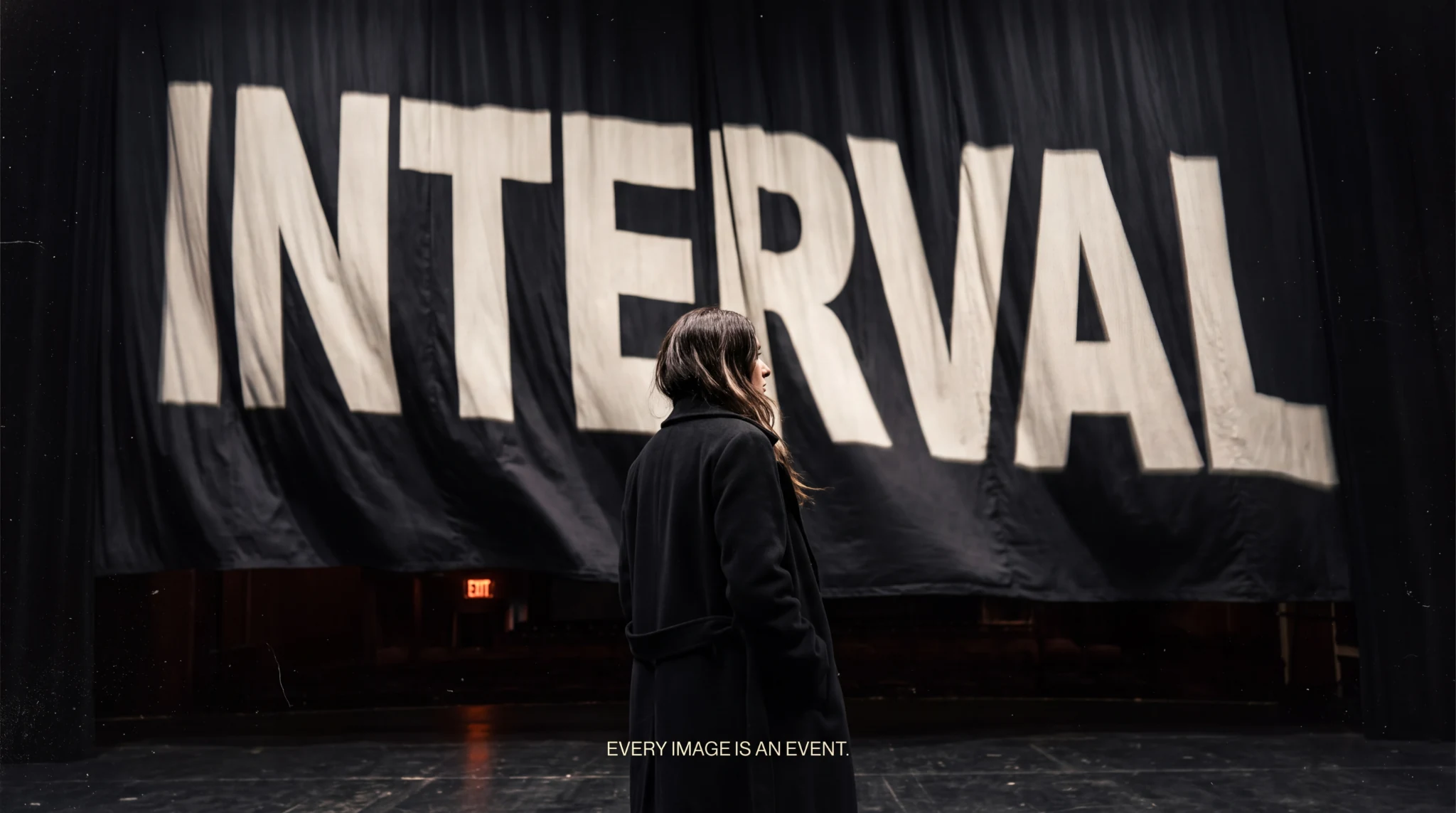
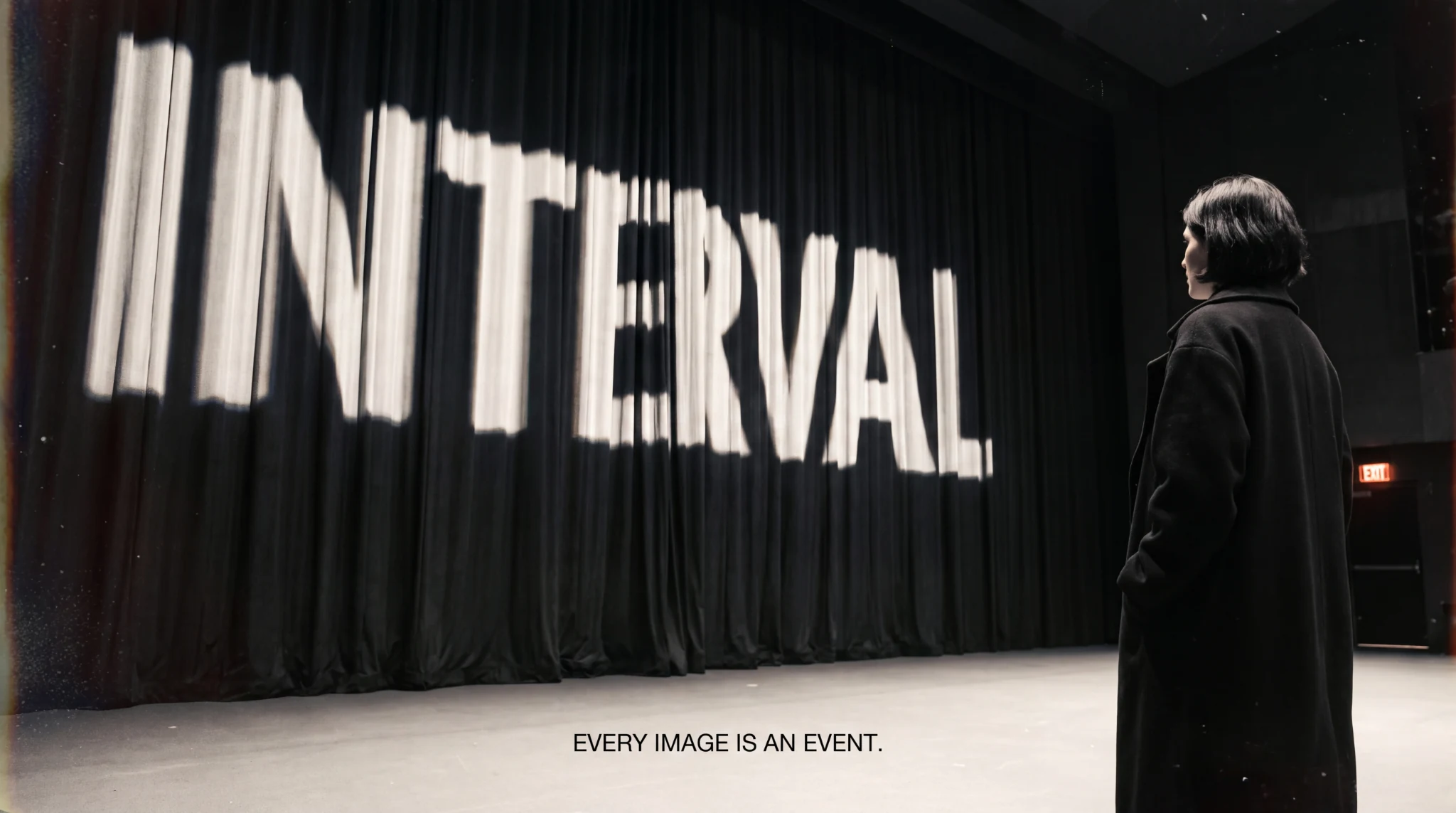
A projected wordmark turns identity into a physical cinematic event rather than a surface graphic.
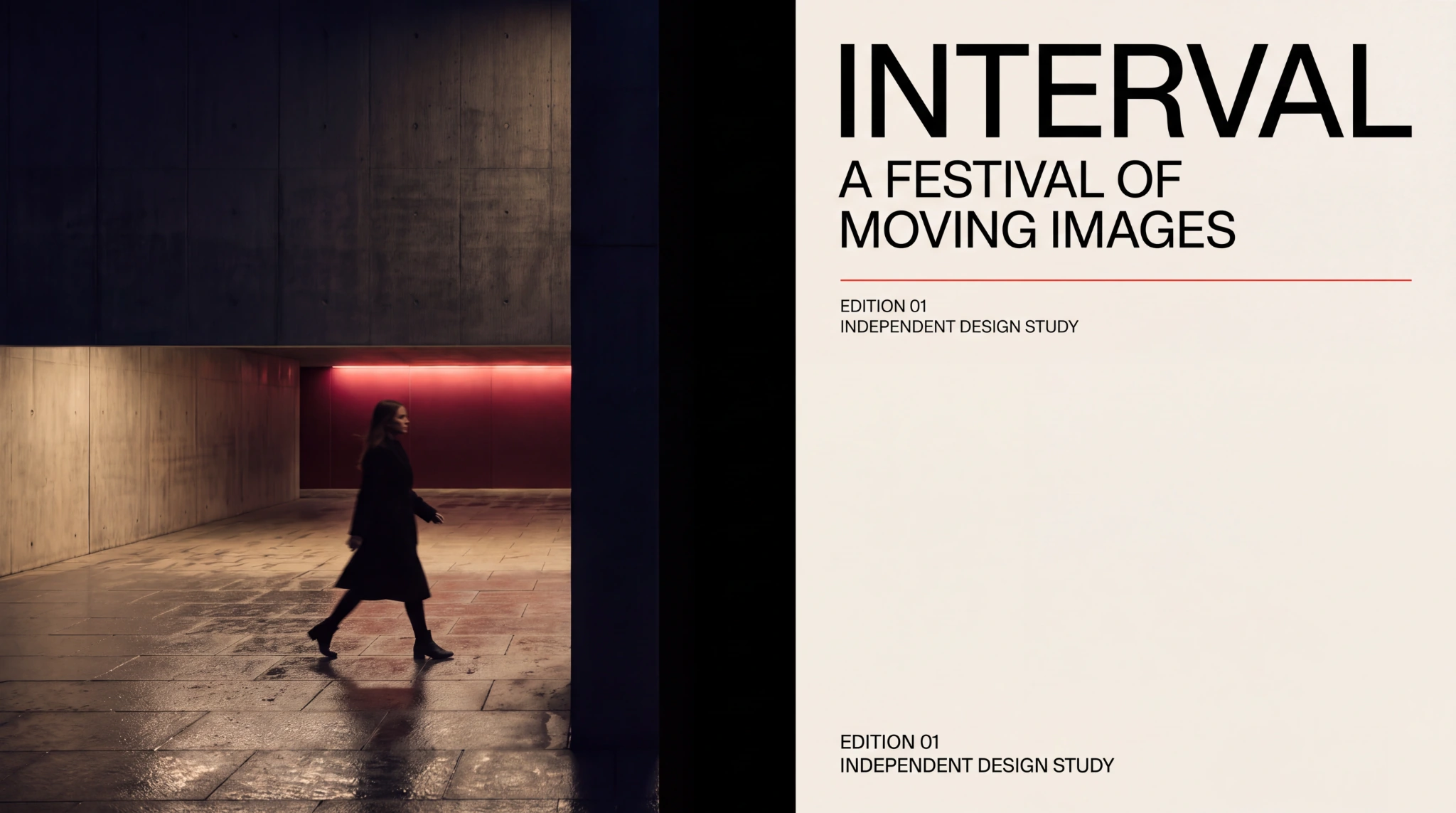
The festival identity pairs a restrained typographic grid with cinematic space.
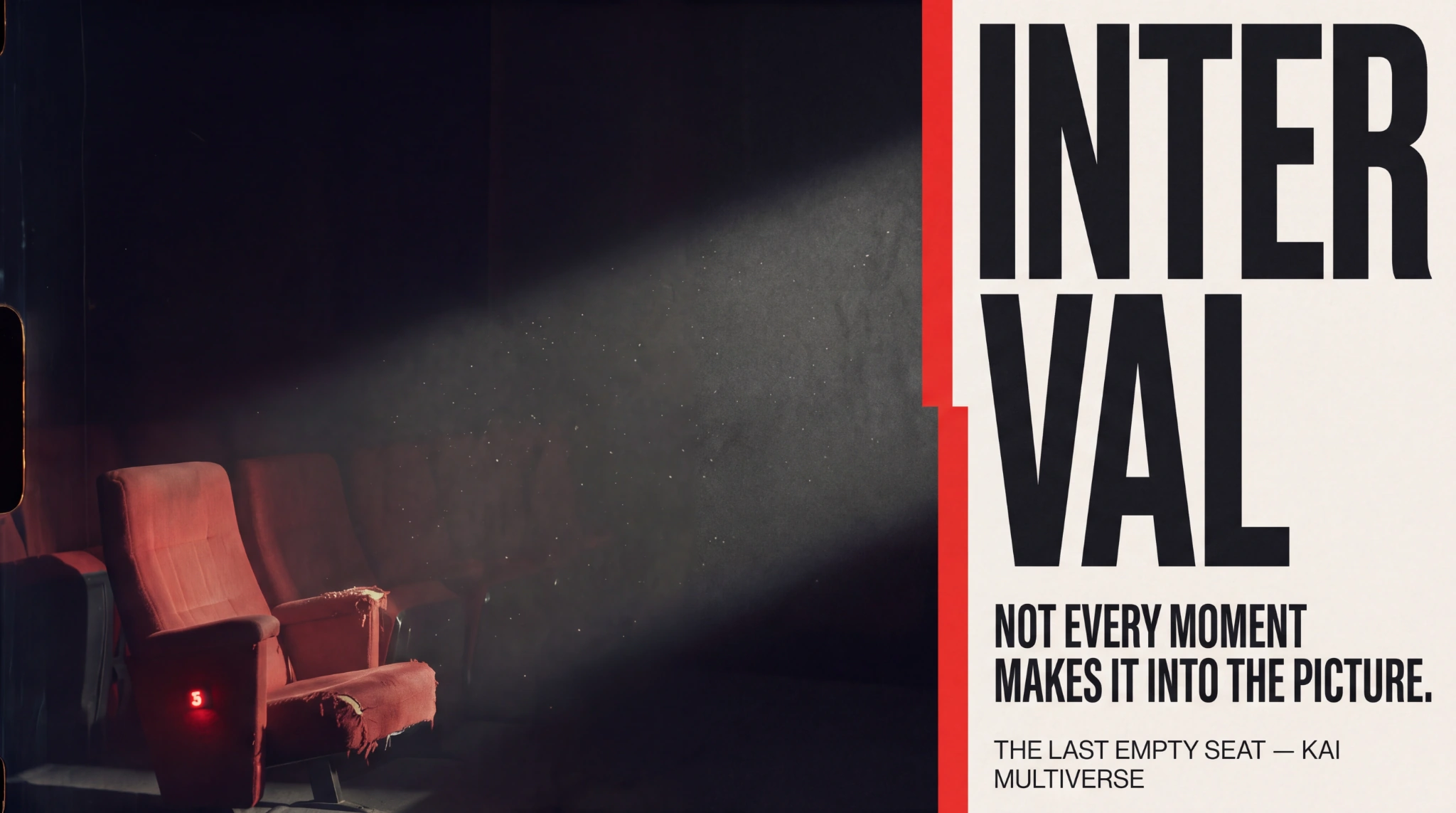
The split wordmark and empty cinema establish the relationship between image, absence and memory.
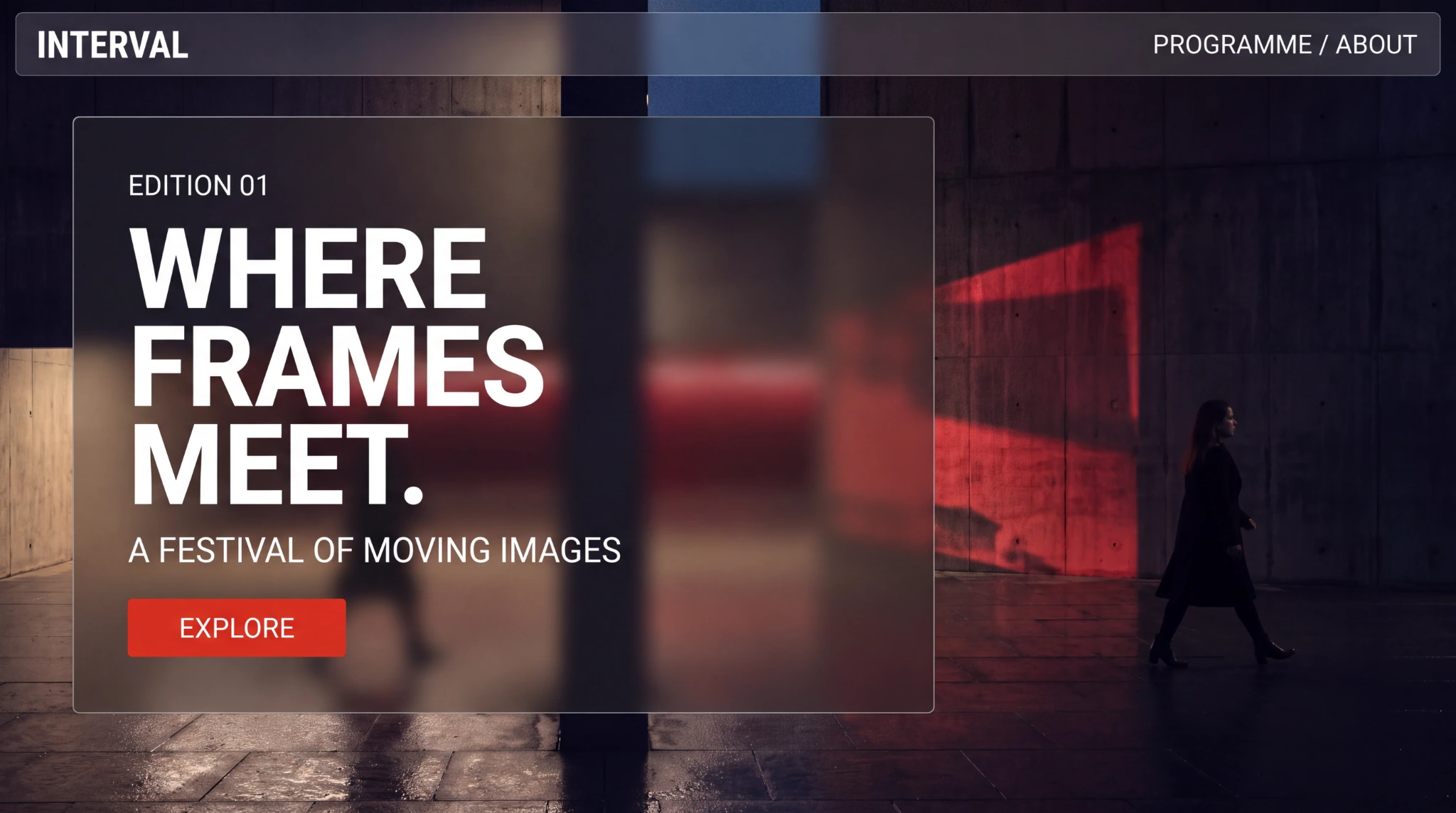
A website concept carries the festival identity into a digital landing-page composition.
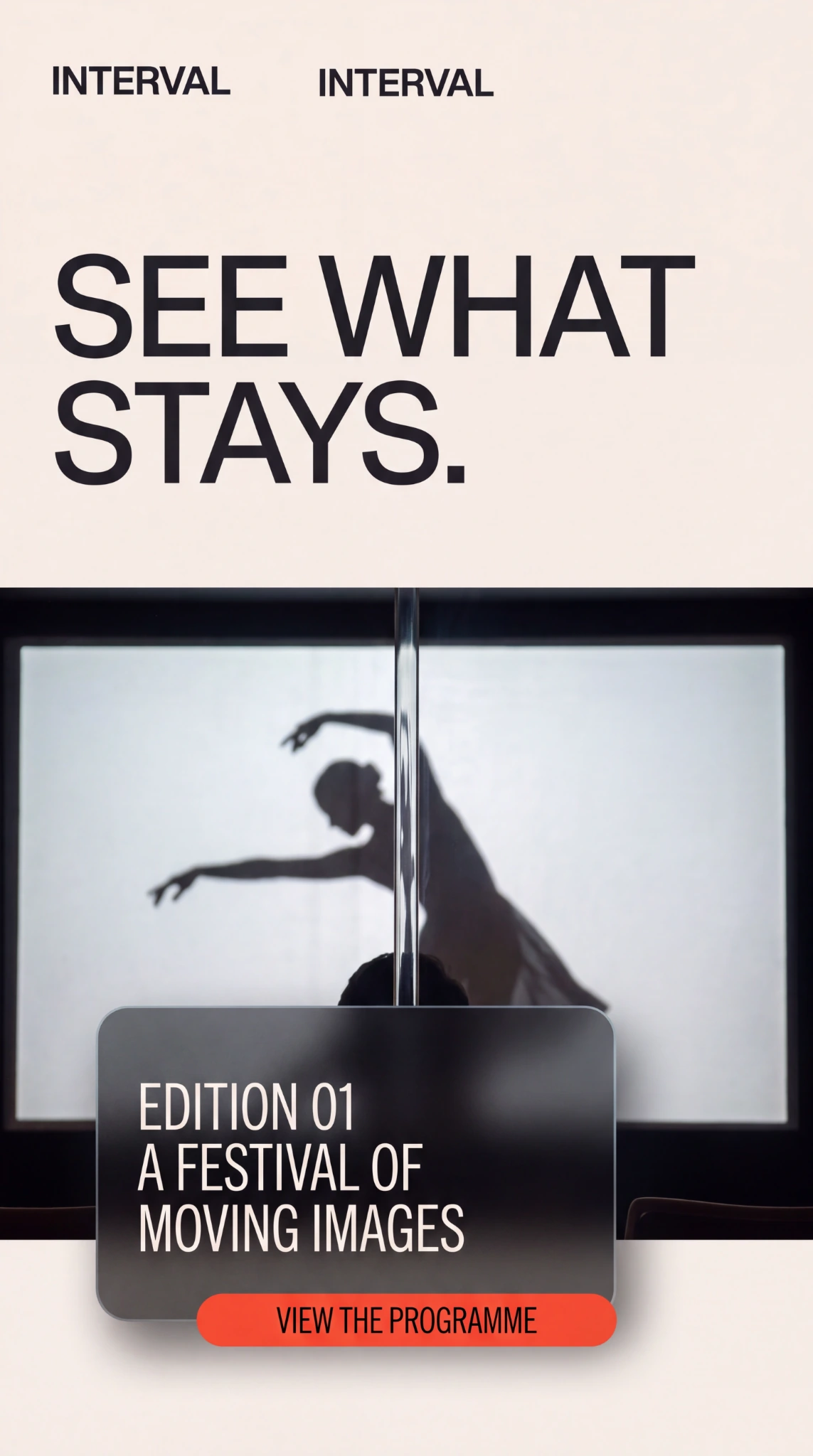
An editorial poster introduces the festival through an image inside an image.
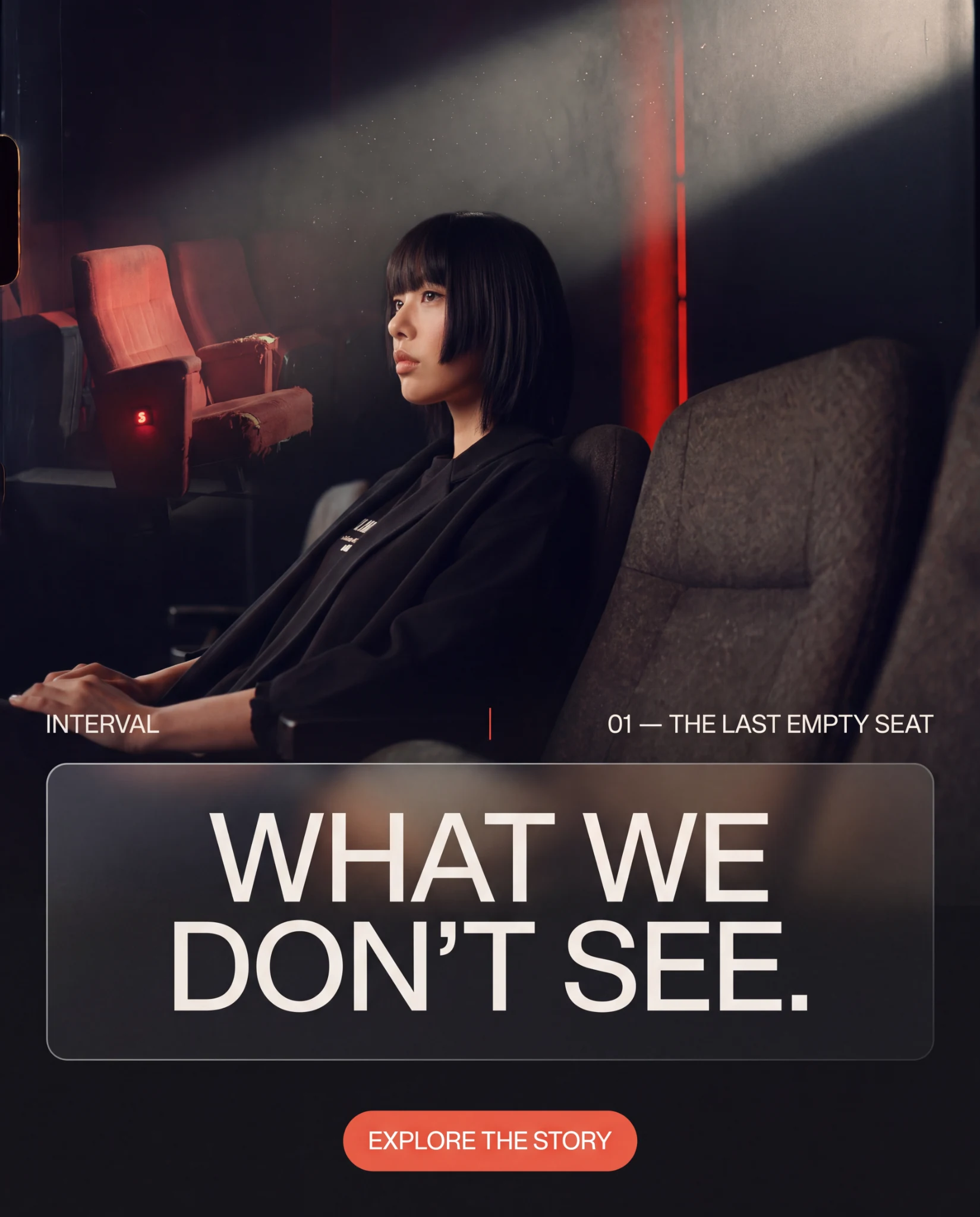
The opening visual question establishes absence as part of the image.
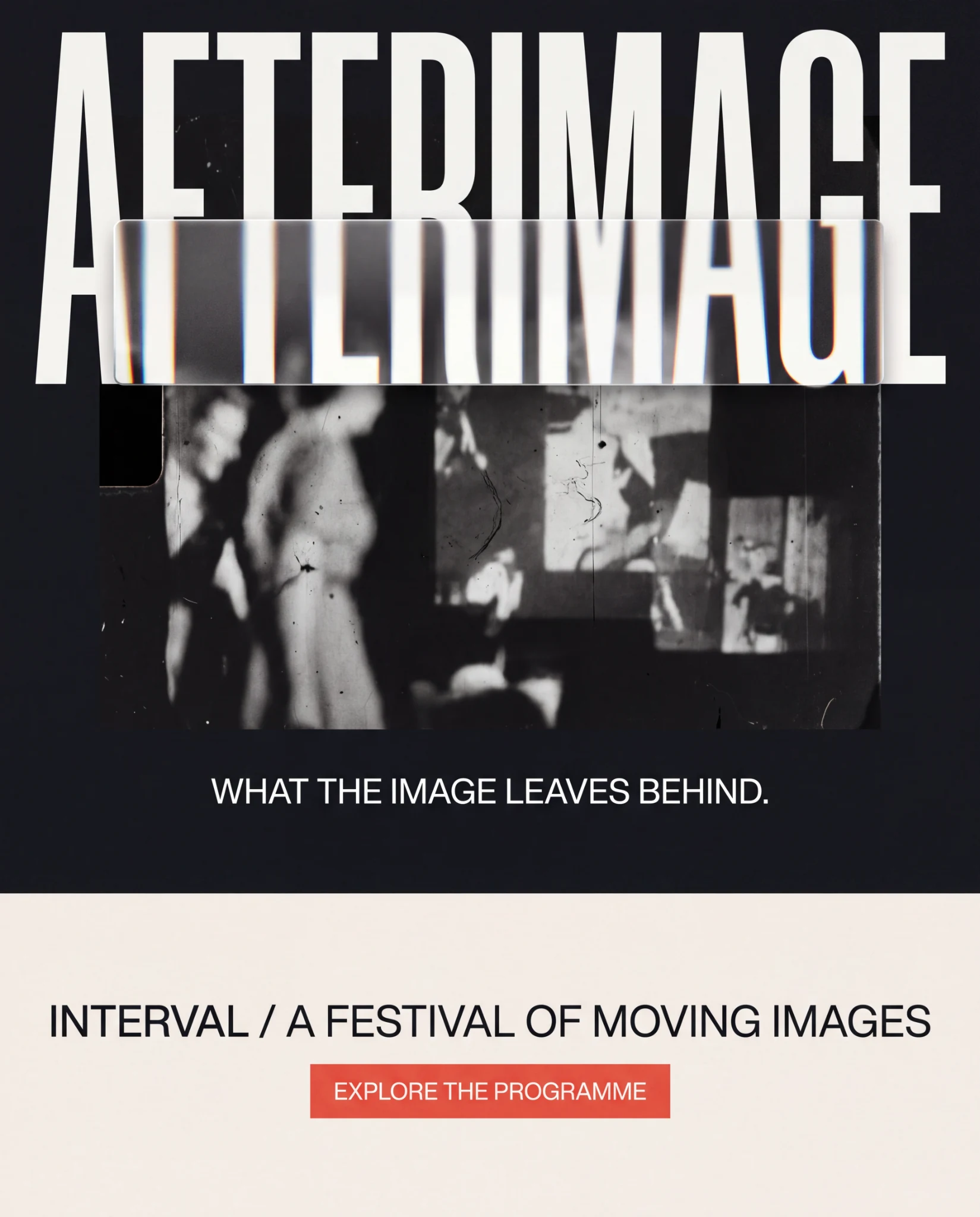
Film grain, frame fragments and compressed type translate visual memory into an editorial object.
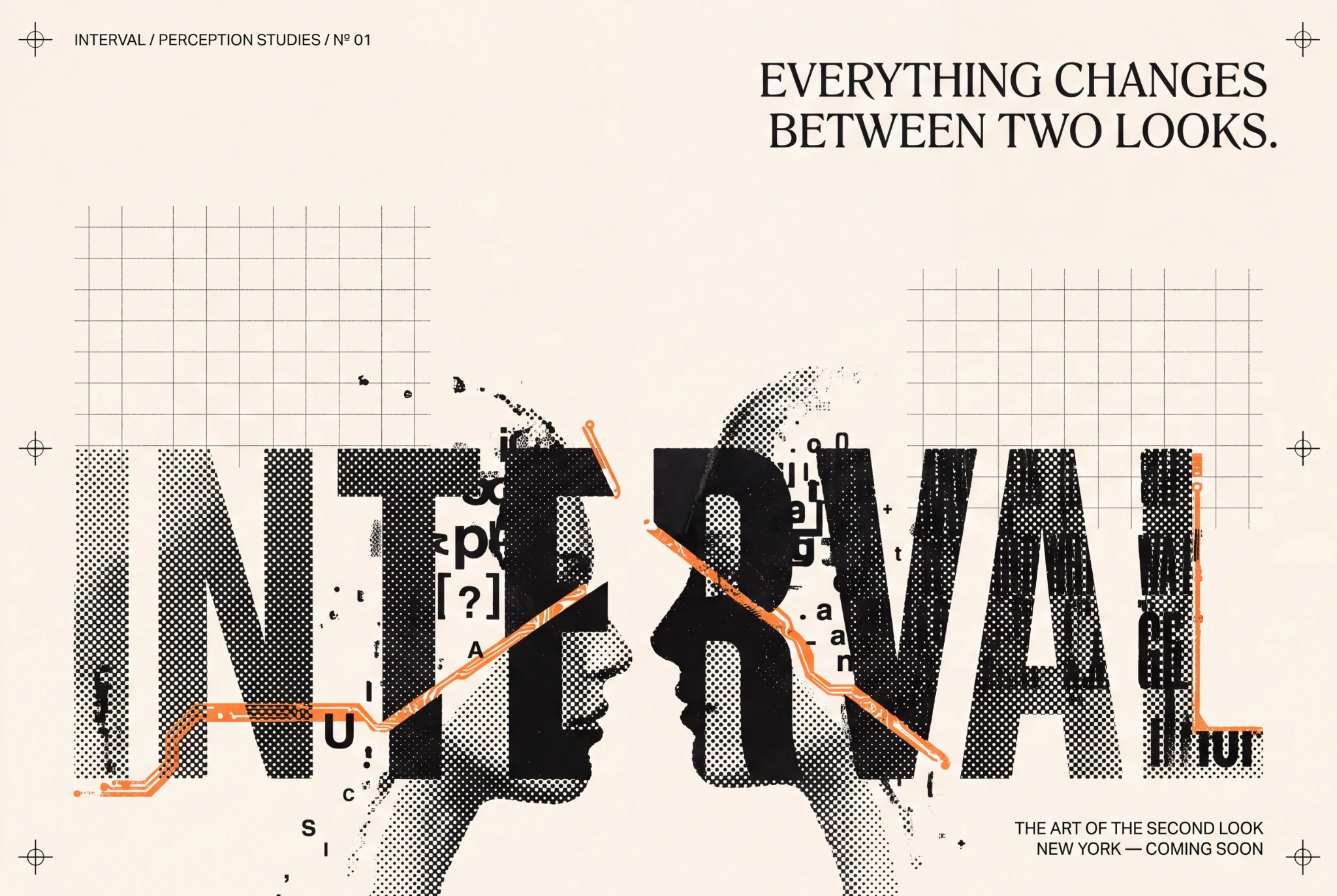
The name fractures across repeated bodies: movement changes what the word becomes.
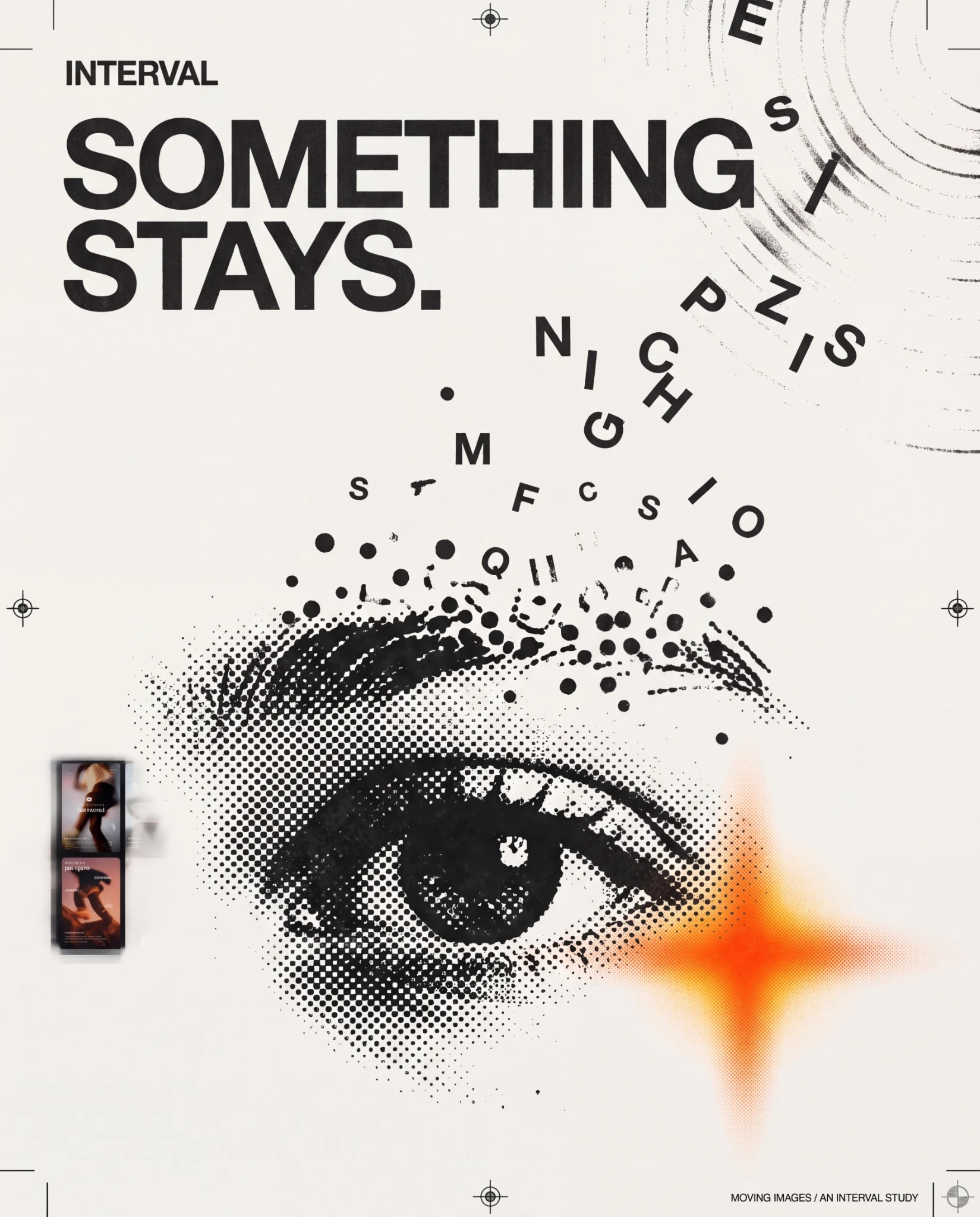
An eye, scattered letterforms and an afterglow reduce the idea to one residual memory.
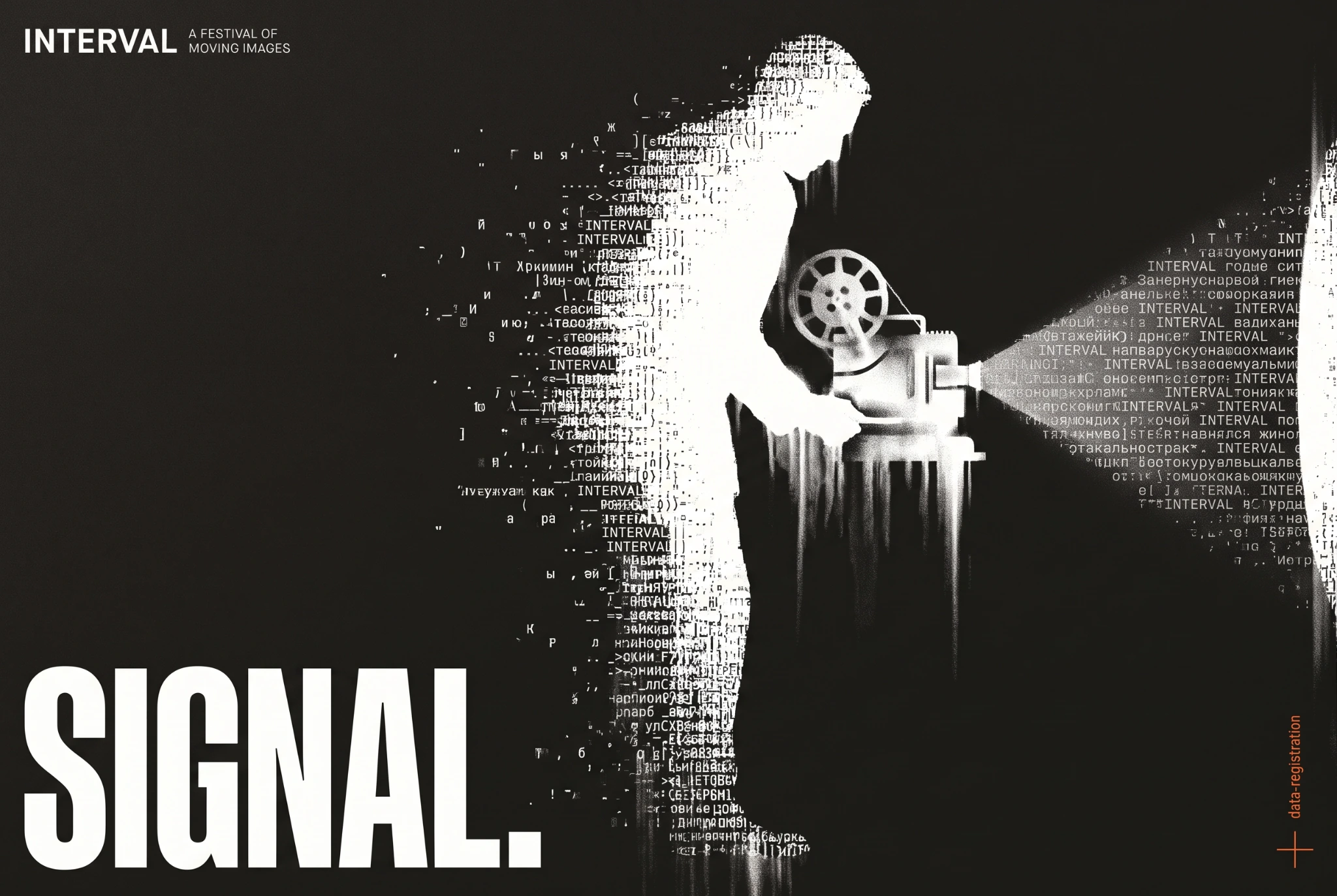
A halftone portrait breaks into a signal field, testing how little information is needed for recognition.
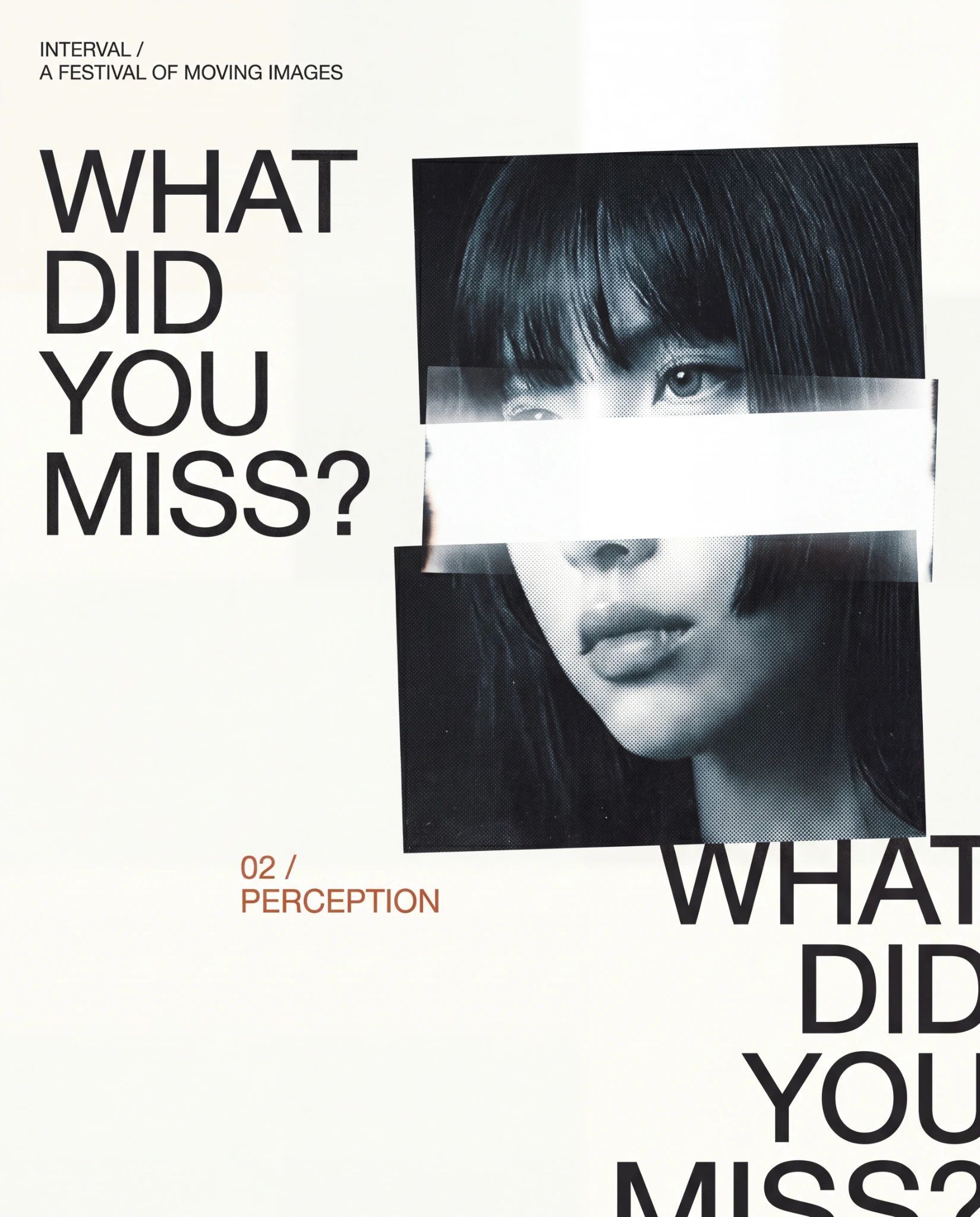
A white interruption cuts through the portrait and shifts attention to what is missing.
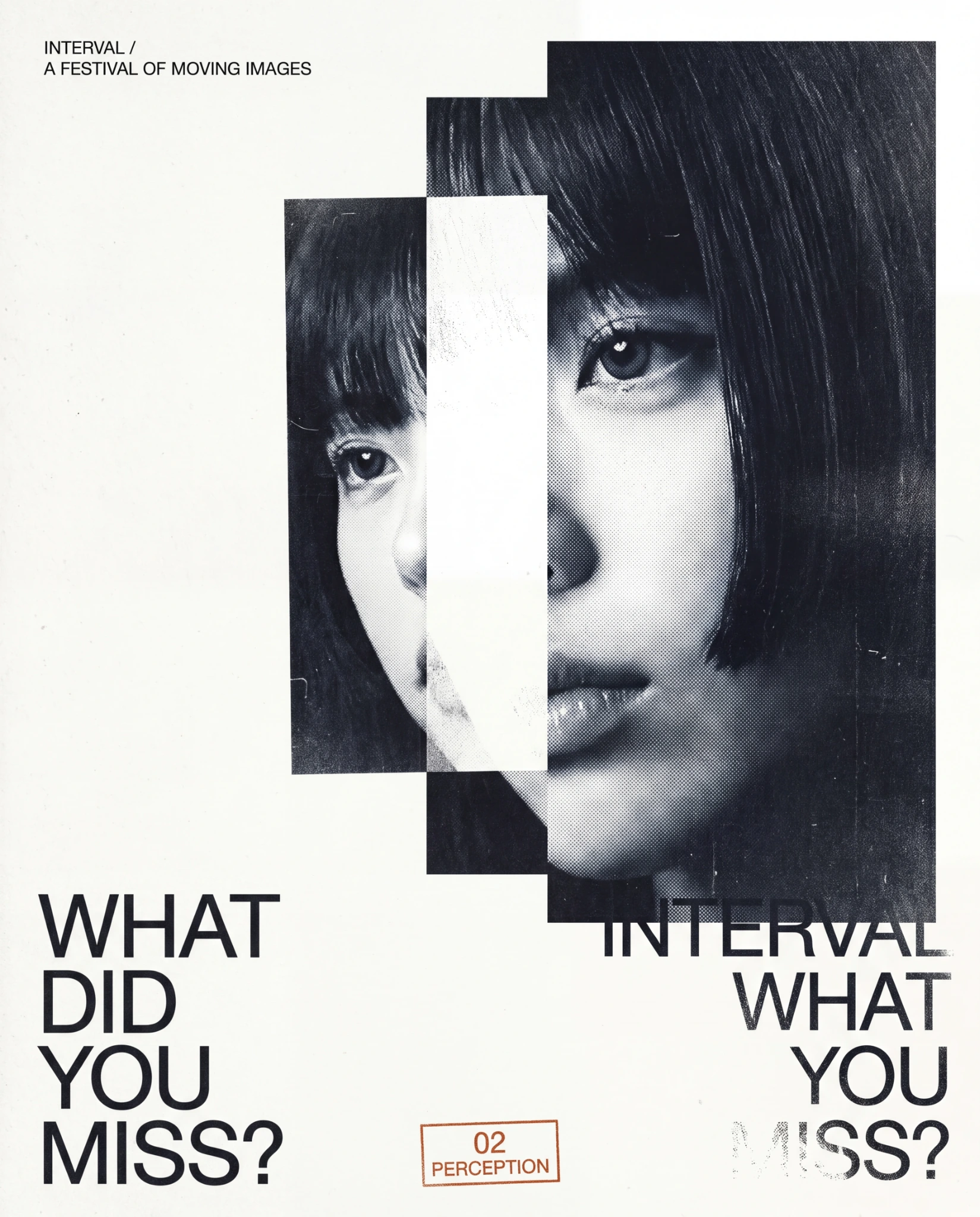
Offset fragments reconstruct a face across an open editorial composition.
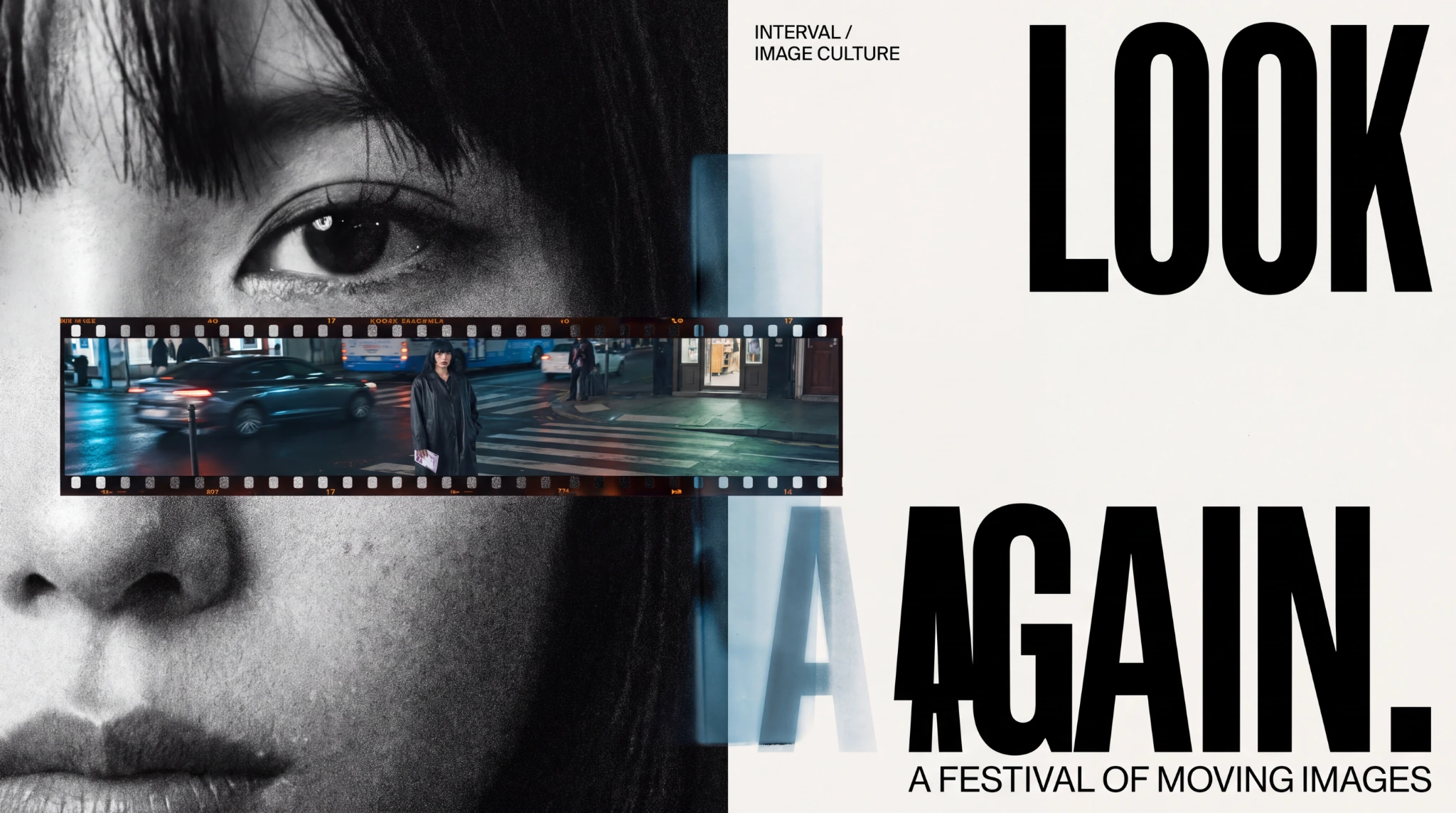
A strip of film interrupts the gaze, linking photographic memory with editorial typography.
What holds
it together.
A project becomes a system when each choice supports the same position—and still works when the format changes.
01PERCEPTION
Make the gap visible
Afterimages, split moments and optical interruption turn the interval between seeing and remembering into the central visual device.
02TYPE
Words behave like frames
Condensed typography is cropped, repeated, projected and interrupted so language participates in the image instead of sitting above it.
03SYSTEM
One question, many expressions
Each composition uses a different mechanism, but every format returns to the same premise: look once, then discover what changed.
The system
has to travel.
Identity is tested where people actually meet it: on a shelf, in a hand, across an image, inside a presentation or through a space.
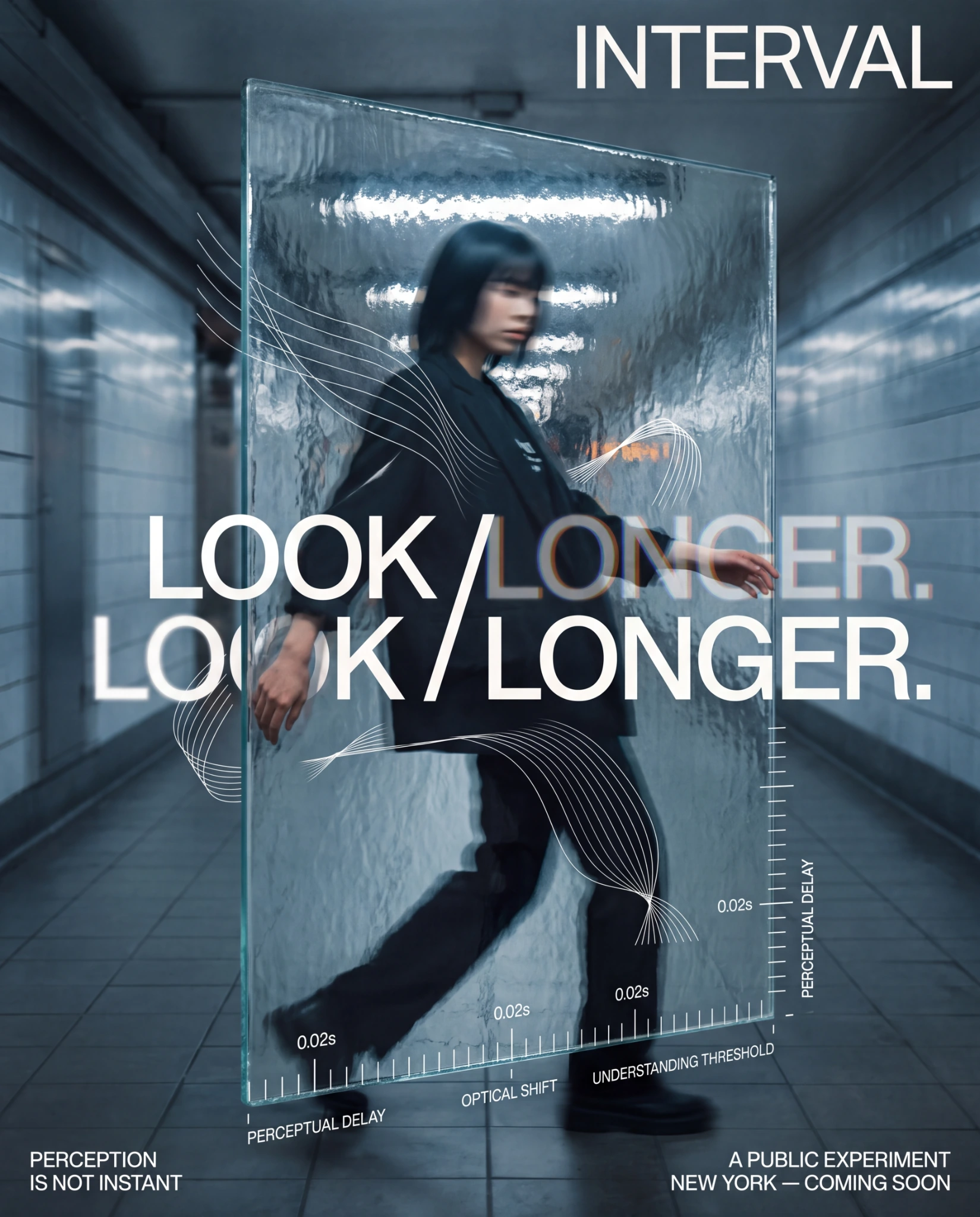
Repeated words and a moving figure turn duration into the subject of the poster.
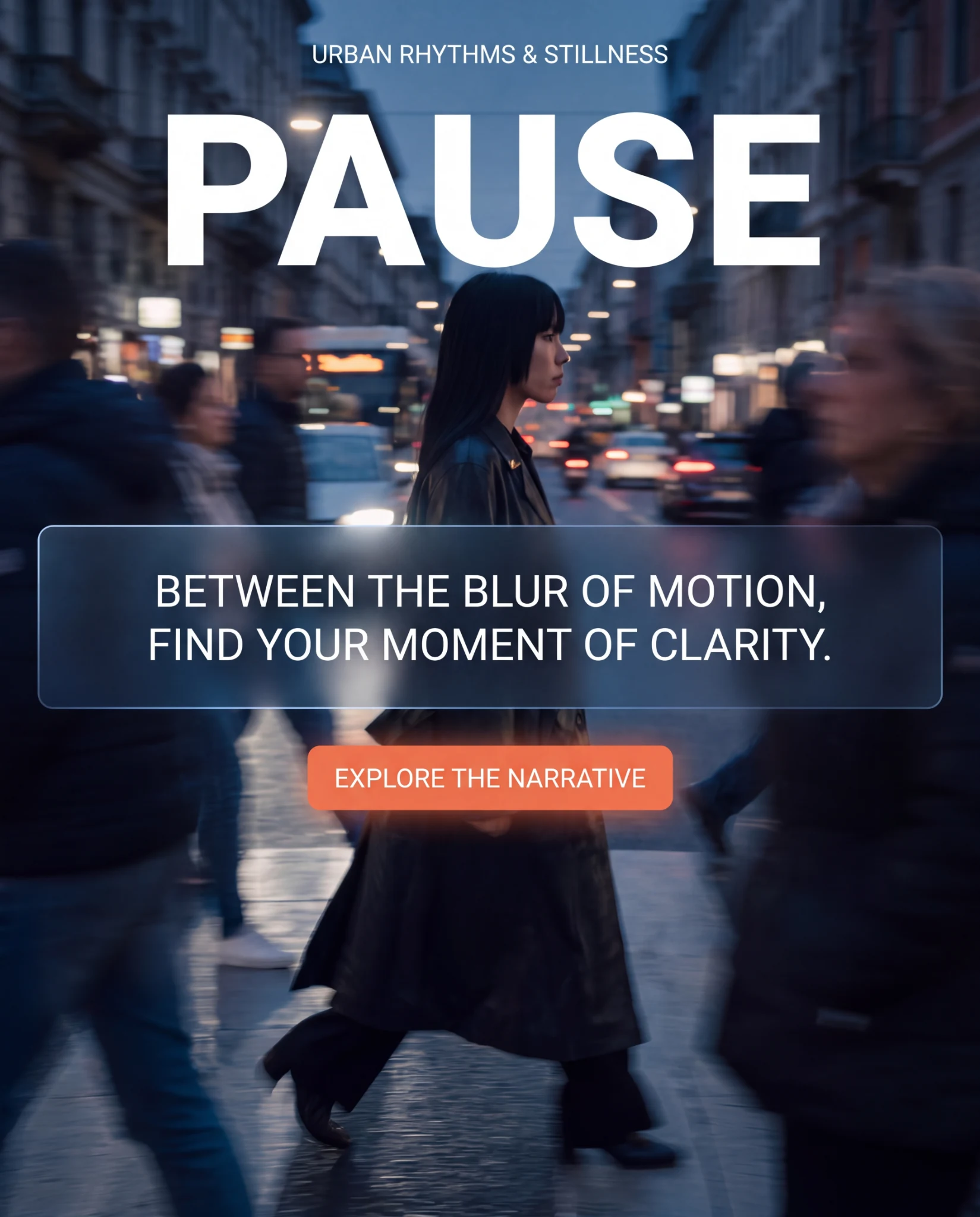
A short command interrupts street motion and makes the viewer search for clarity.
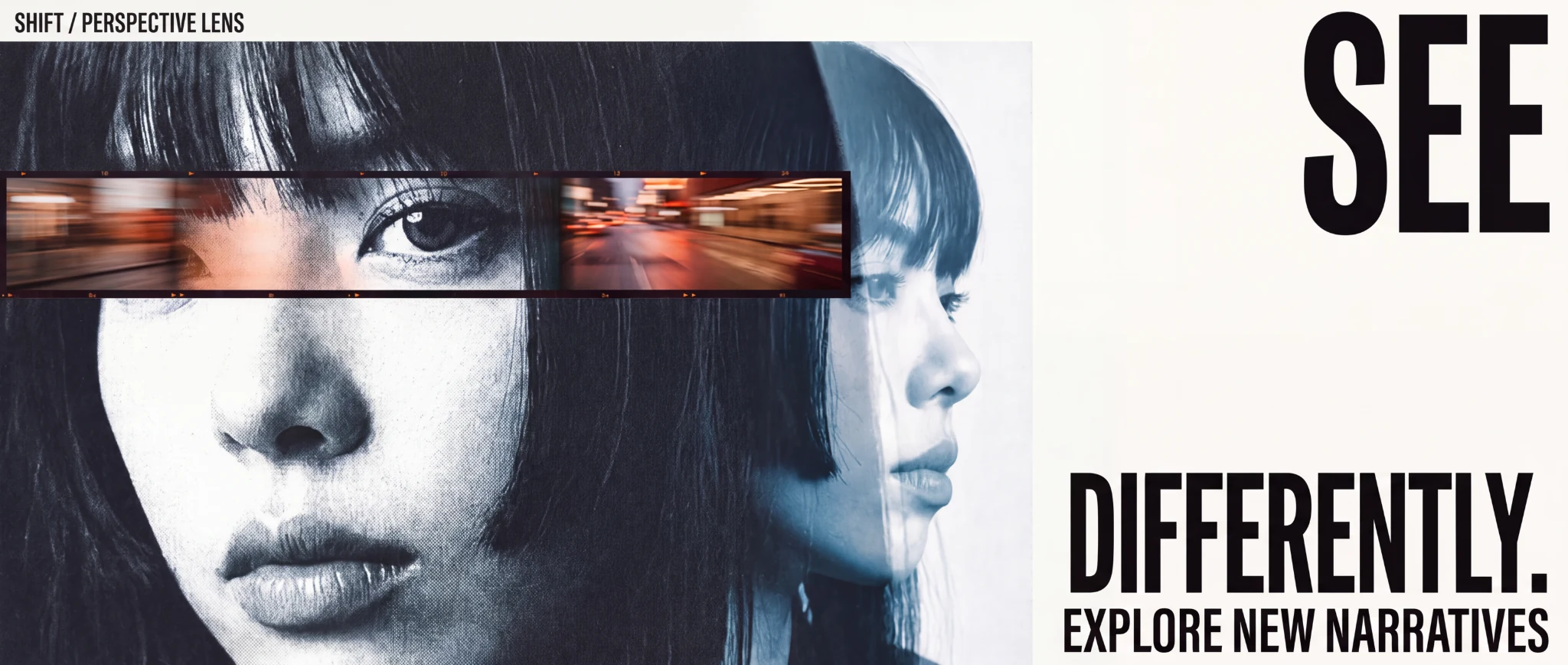
A split portrait makes two readings coexist in one controlled composition.
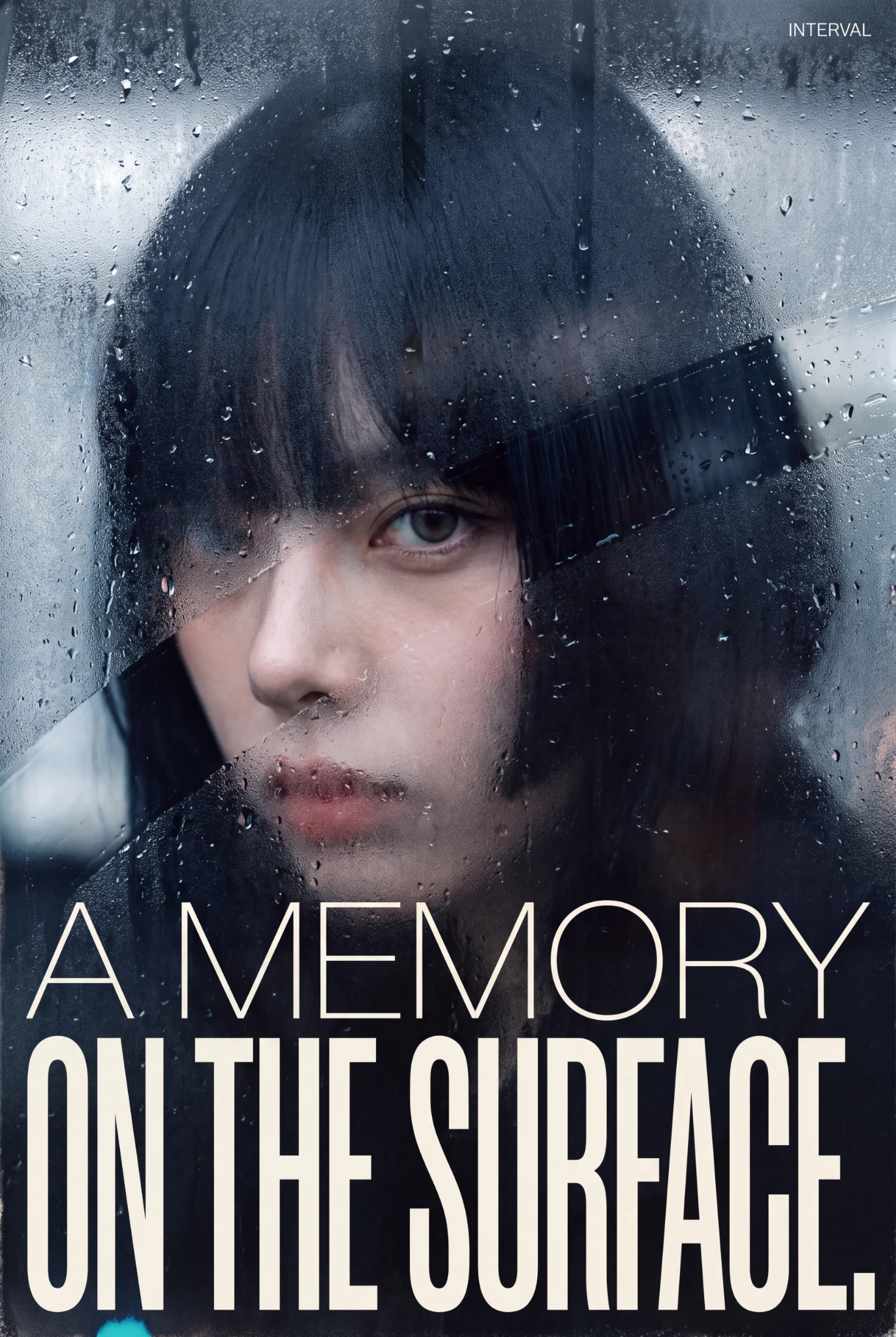
Rain and glass become an optical layer between subject, viewer and recollection.
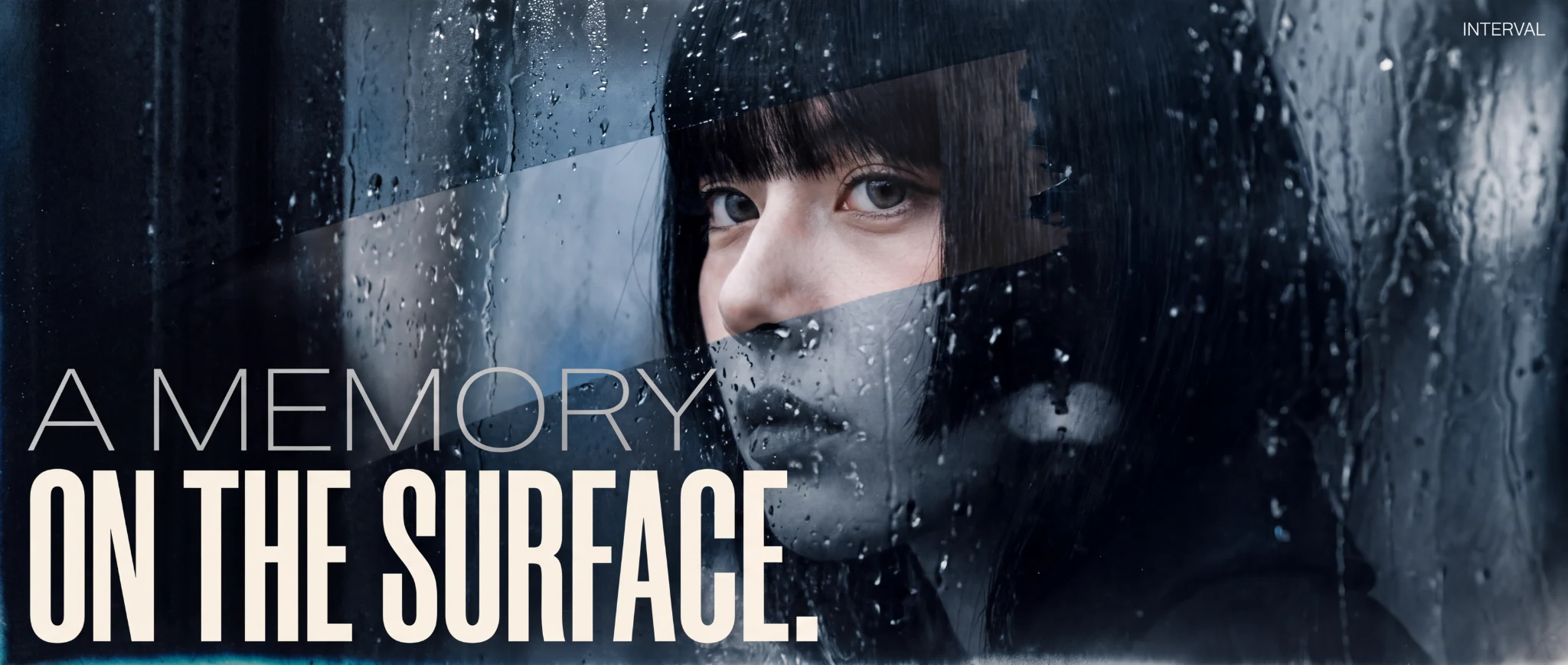
The rain system expands into a cinematic landscape without losing the headline or face.
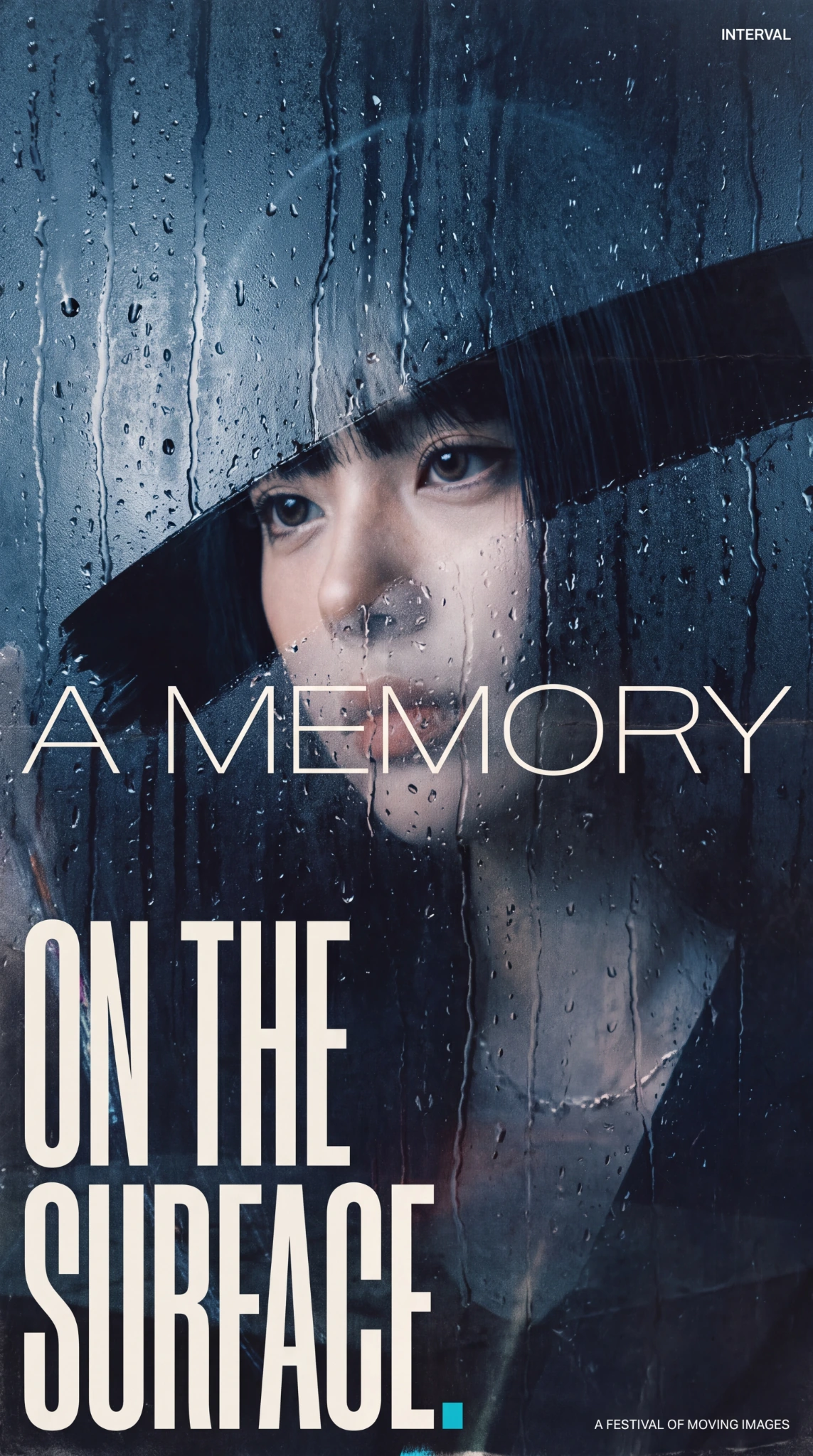
The rain image adapts to a tall format through a different crop and typographic rhythm.
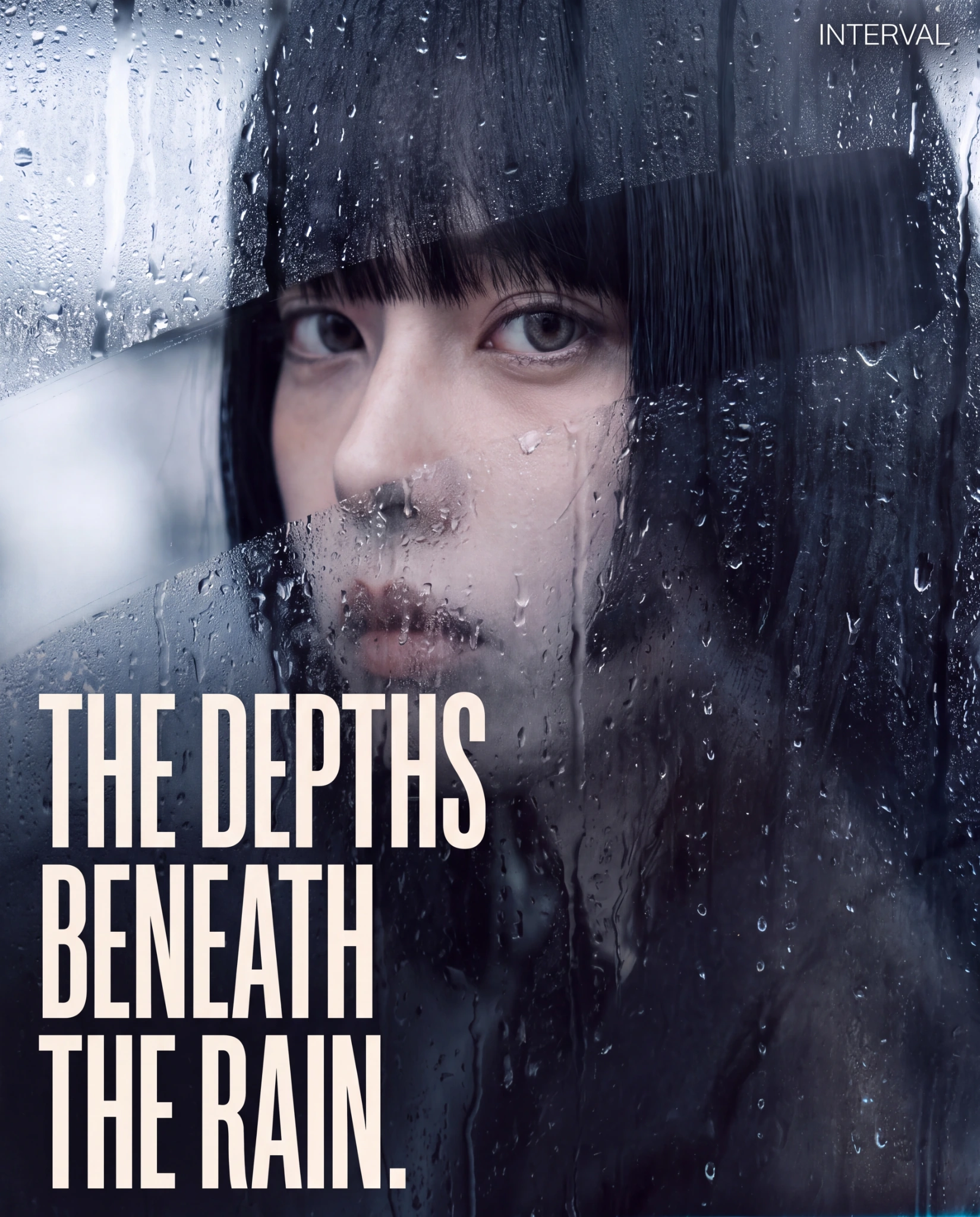
Water and reflected light become a surface between the viewer and the portrait.
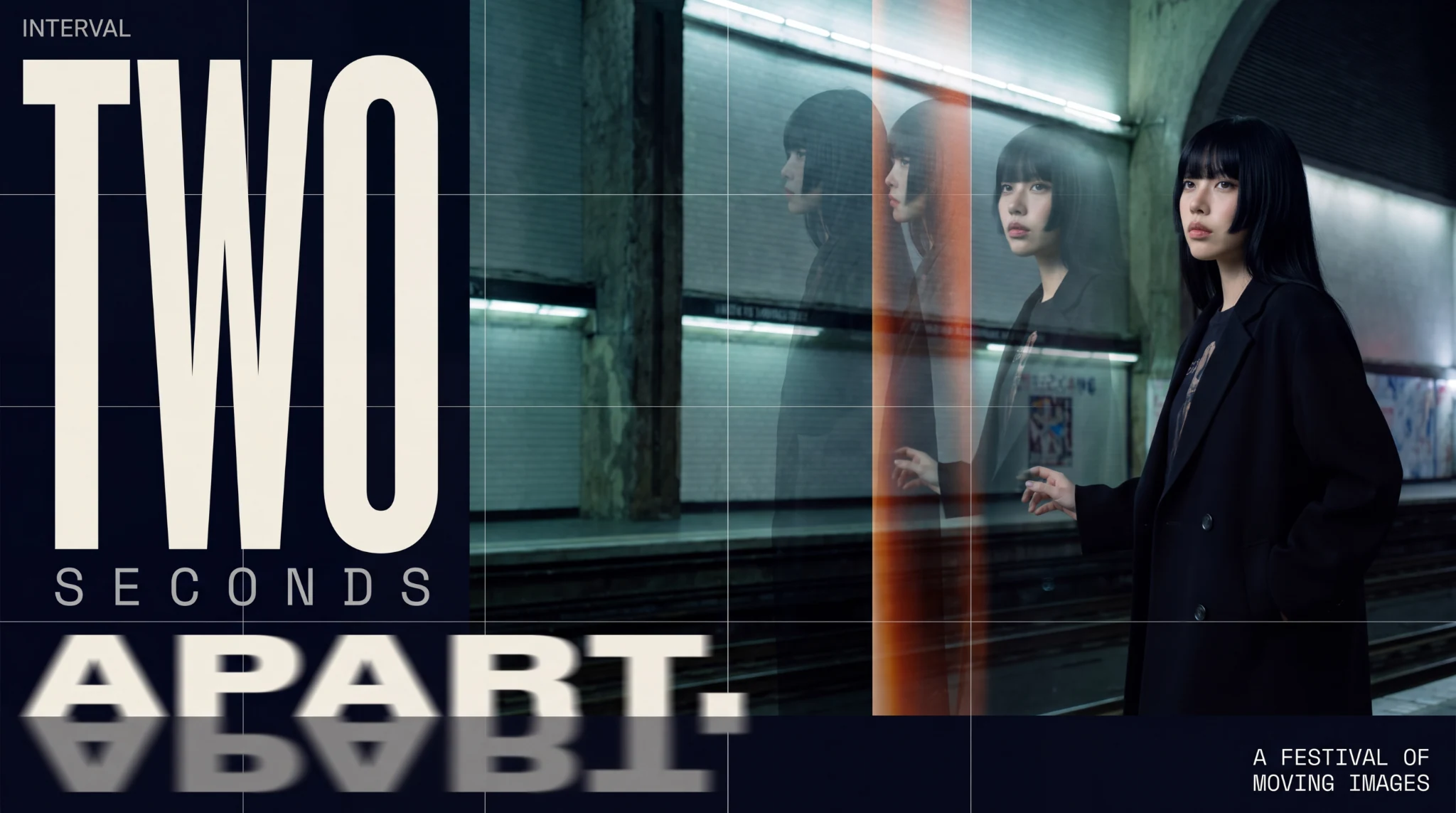
Two temporal positions occupy the same frame, turning elapsed time into the campaign image.
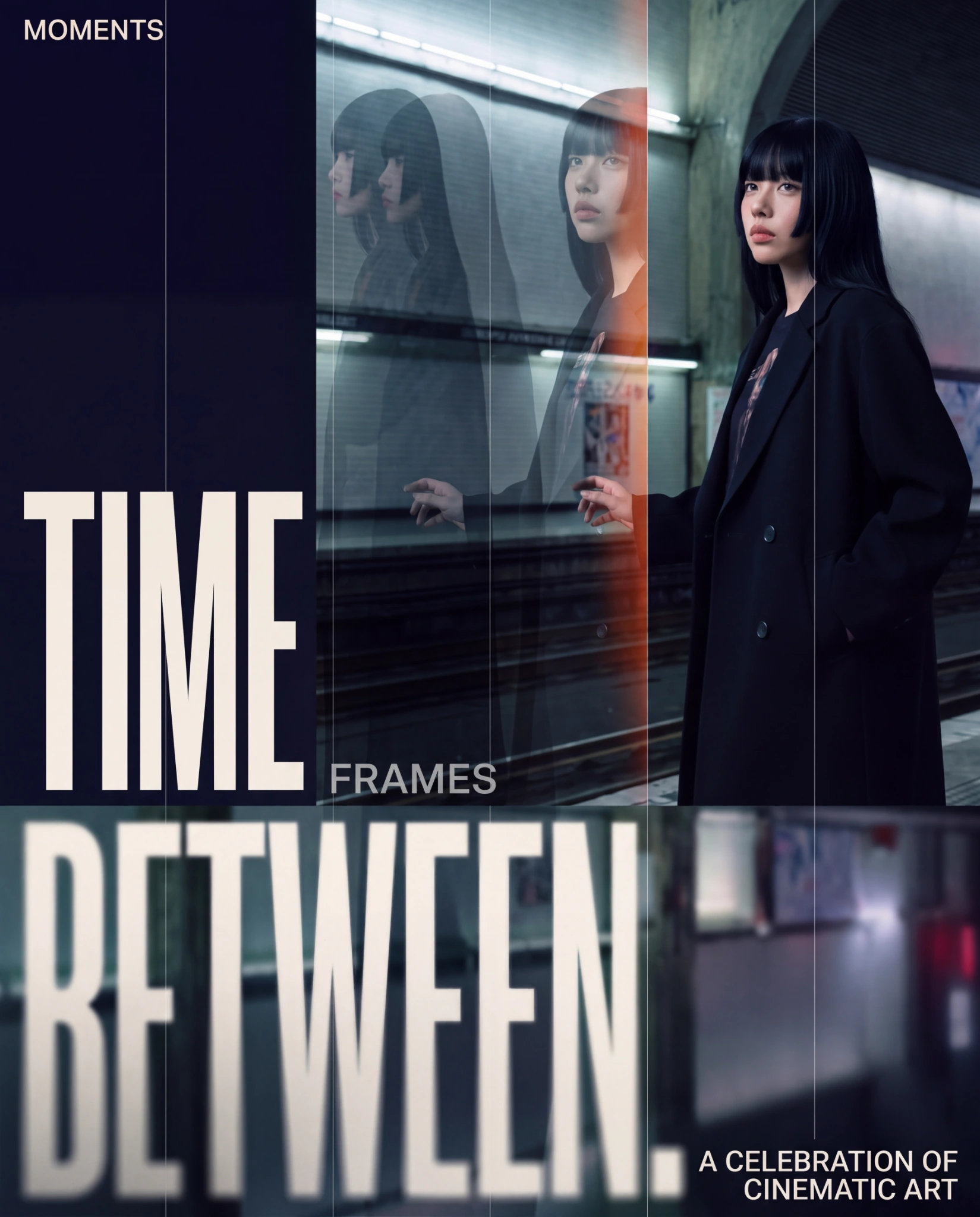
A vertical arrangement of temporal fragments extends the Two Seconds Apart sequence.
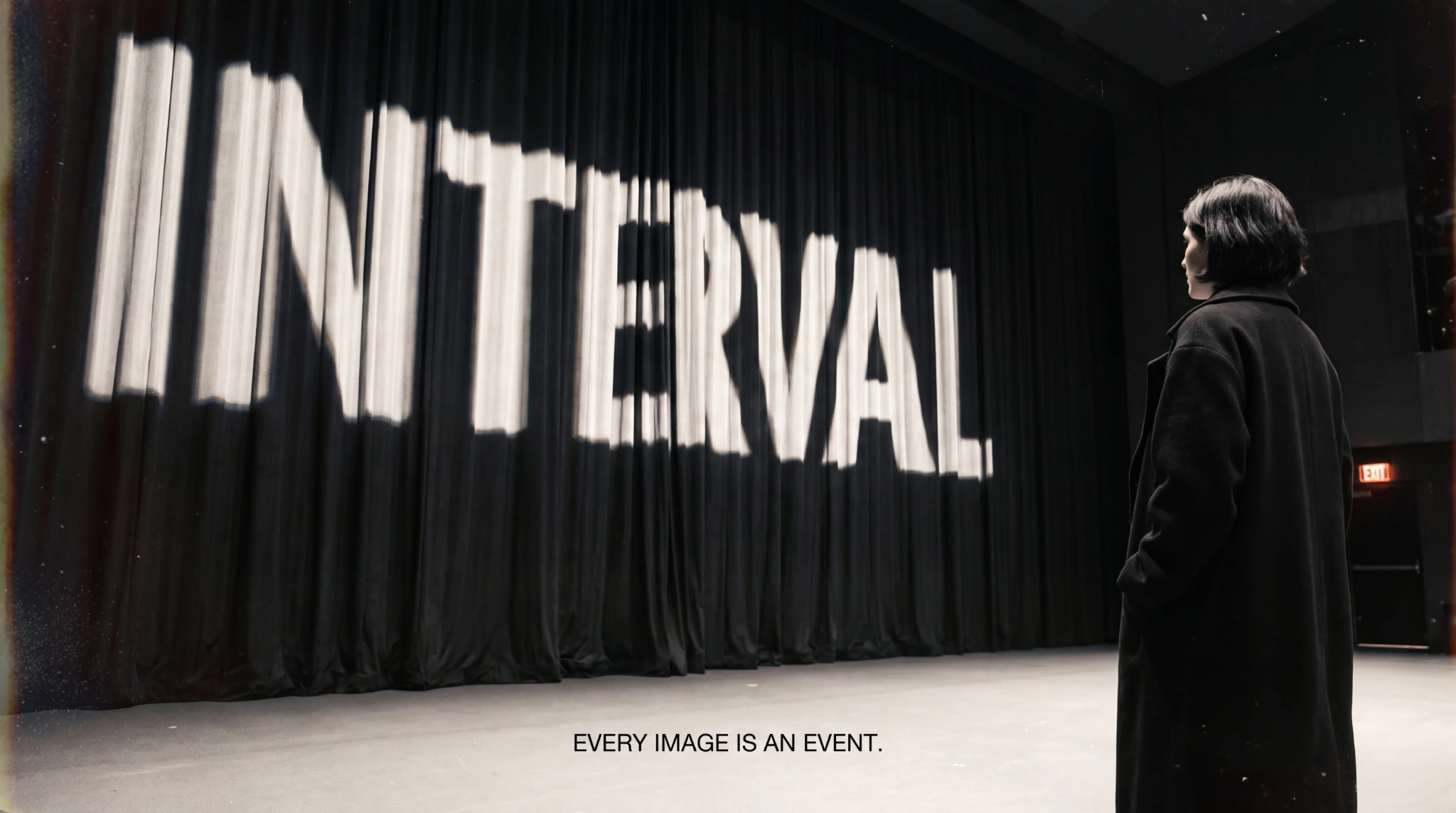
The identity is imagined at environmental scale, where distortion is produced by light and material.
Projected lettering across a curtain brings the identity into an imagined physical environment.
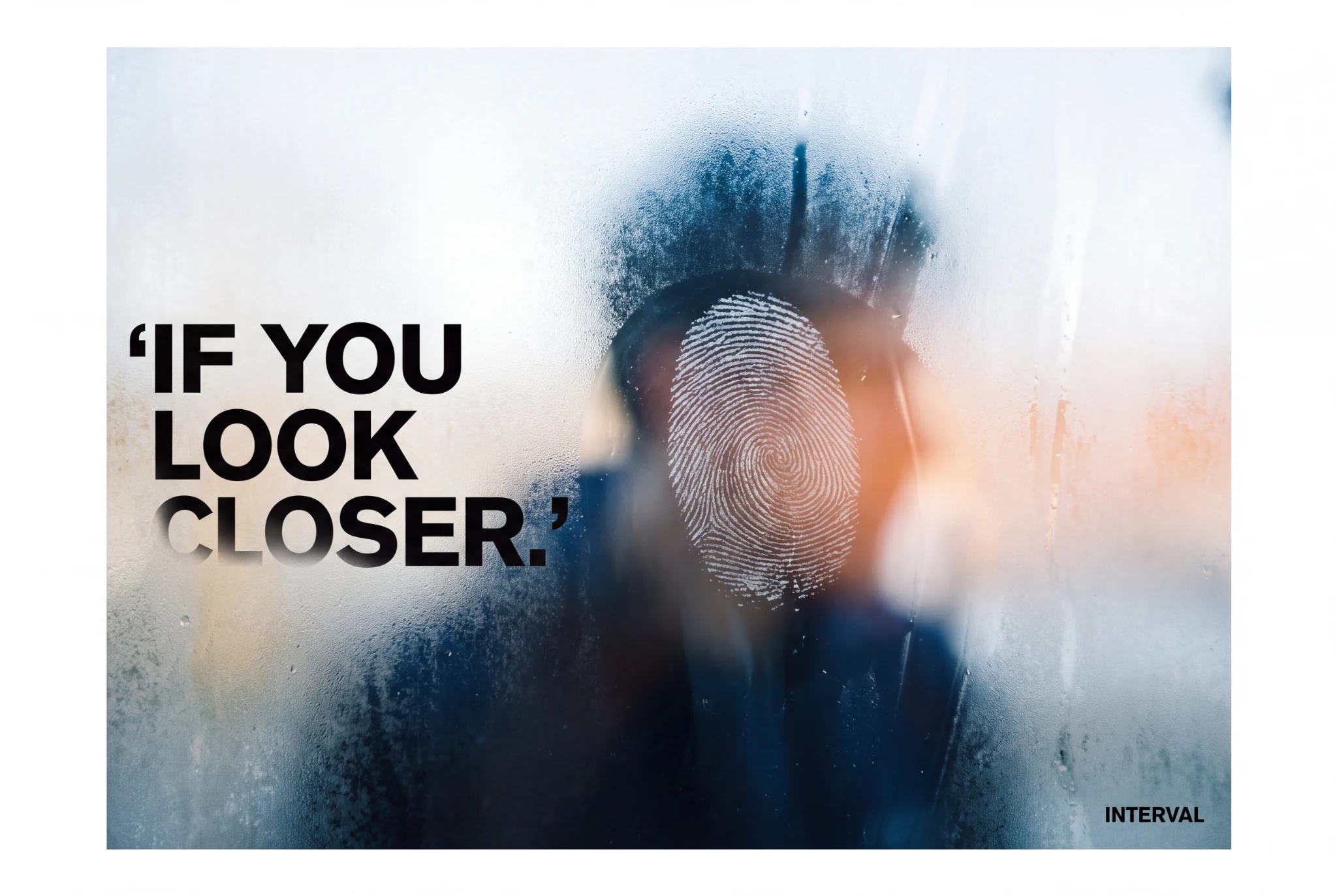
A fogged optical field asks the viewer to complete what the image withholds.
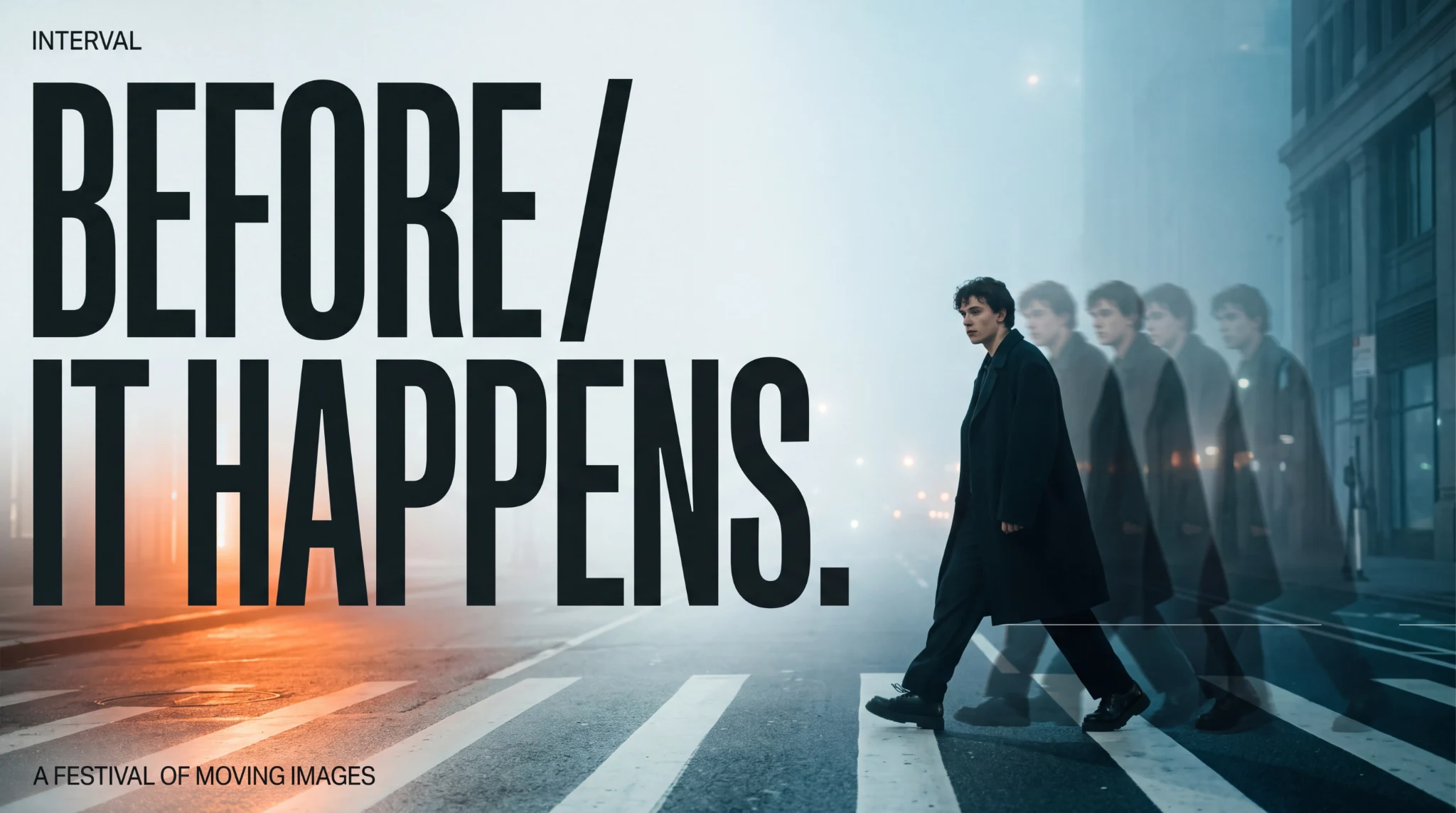
A sequence of walking afterimages closes the system with an immediate large-scale statement.
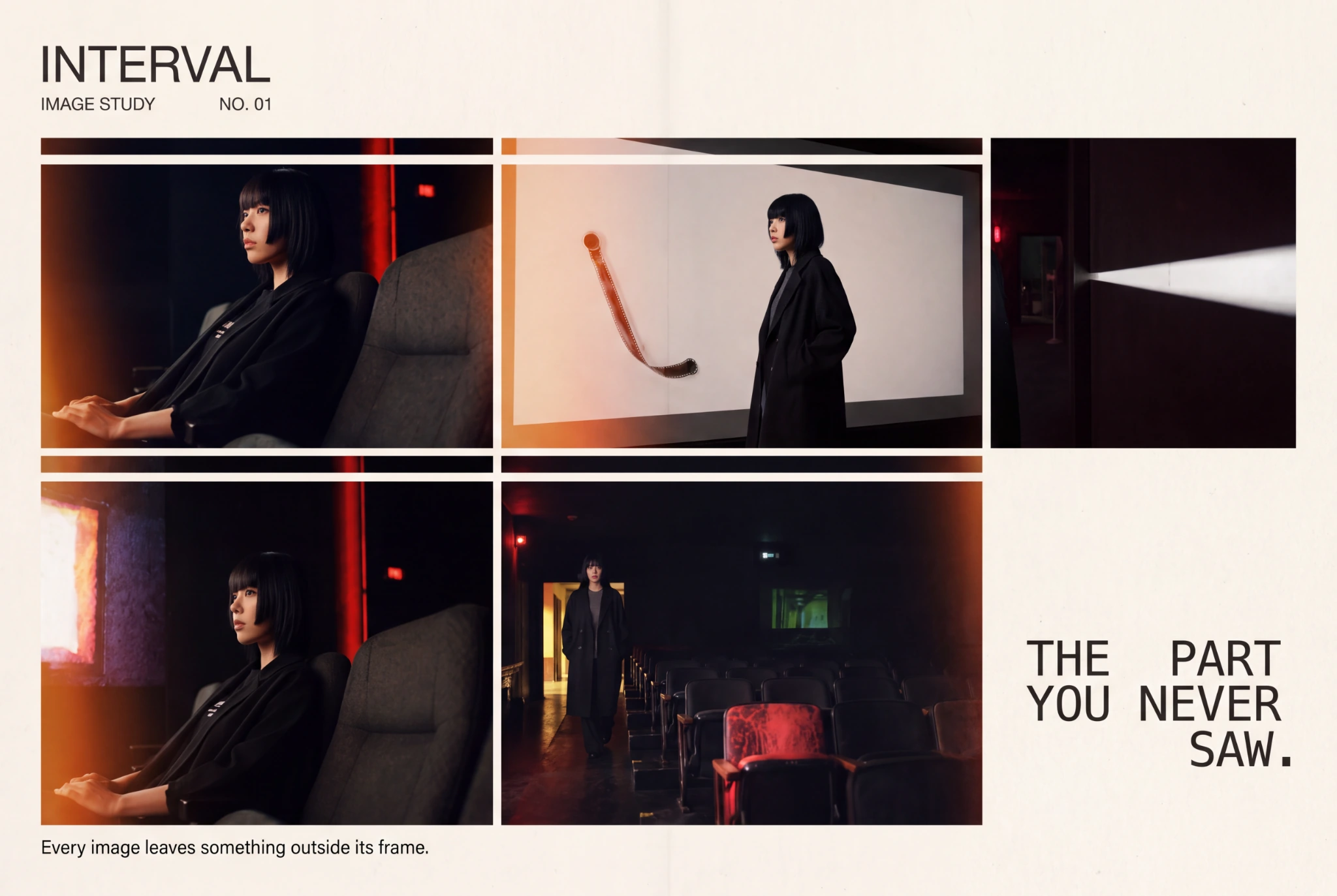
A sequence of cinematic stills presents the image-study language behind the campaign.
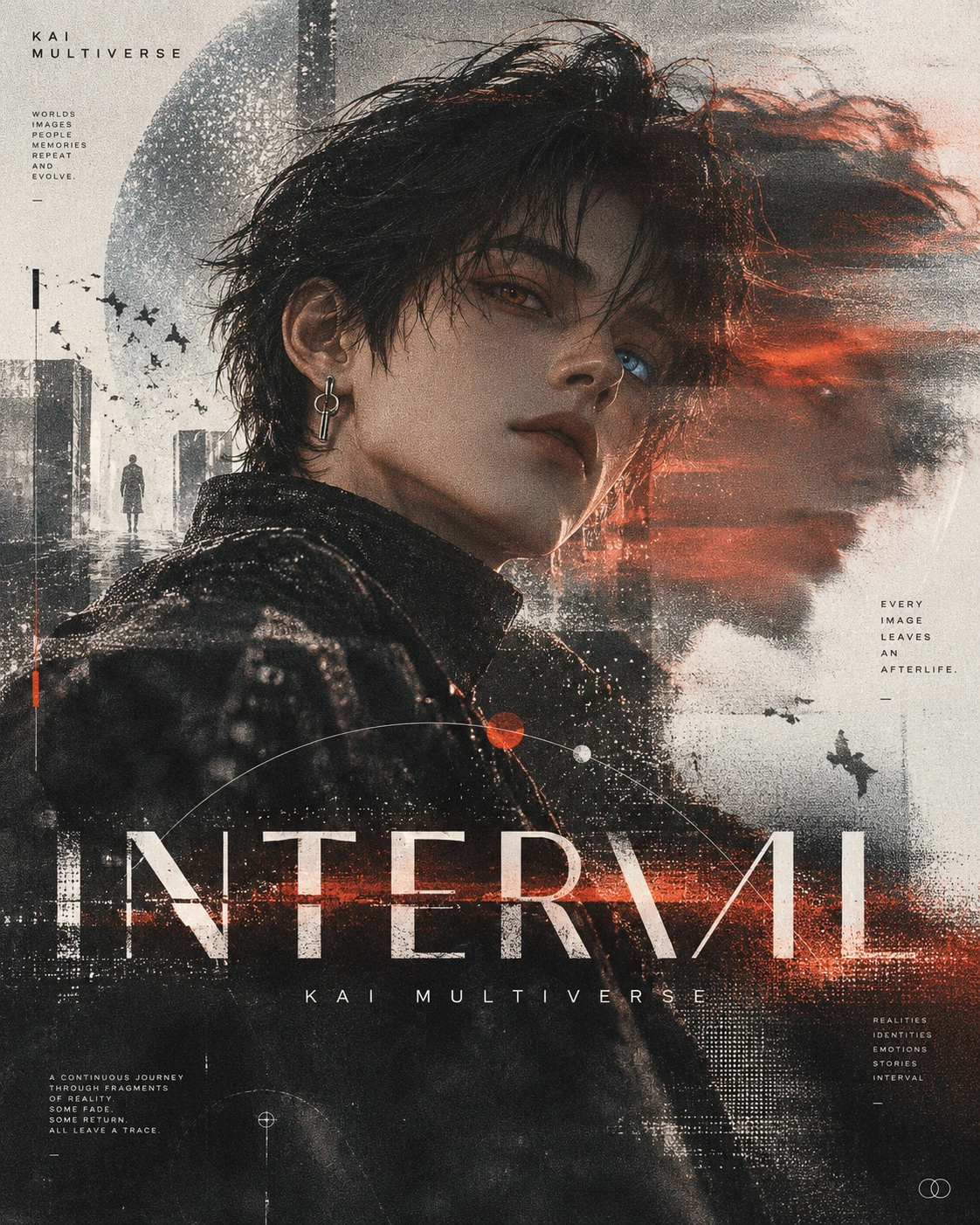
A fragmented portrait extends the exploration of motion, residue and visual memory.
01Concept and positioning02Visual identity03Opening film04Campaign key art05Editorial system06Social adaptations07Outdoor concepts08Behance case study
04 / POSITION AFTER THE WORK
A coherent moving-image identity that travels from an atmospheric opening film to campaign key art, editorial compositions and large-scale visual statements.
AUDIENCE
Film, design and visual-culture audiences
GEOGRAPHY
Independent / global concept
STATUS
Self-initiated speculative project / published 2026
AUTHORSHIP
Independent concept / creative direction by KAI MULTIVERSE®
We do not remember continuous footage. We remember selected frames, and the mind rebuilds the interval between them.
The human lens informs the creative choices; it is not presented as a claim that design can control behaviour.
06 / ROLE
Creative direction · Concept · Graphic design · Experimental imaging
PROJECT TYPE
Self-initiated speculative concept
PROJECT CREDIT
View the extended visual case on Behance↗Kheireddine Smaili
Independent concept / KAI methodology