The interpretive key for the entire archive. It records the doctrine KAI uses to decide why a file should exist, what it must carry and where visual intensity must stop.
Archive / Published2026
Philosophy Unit
Pressure into language. Chaos into structure. Pain into form.
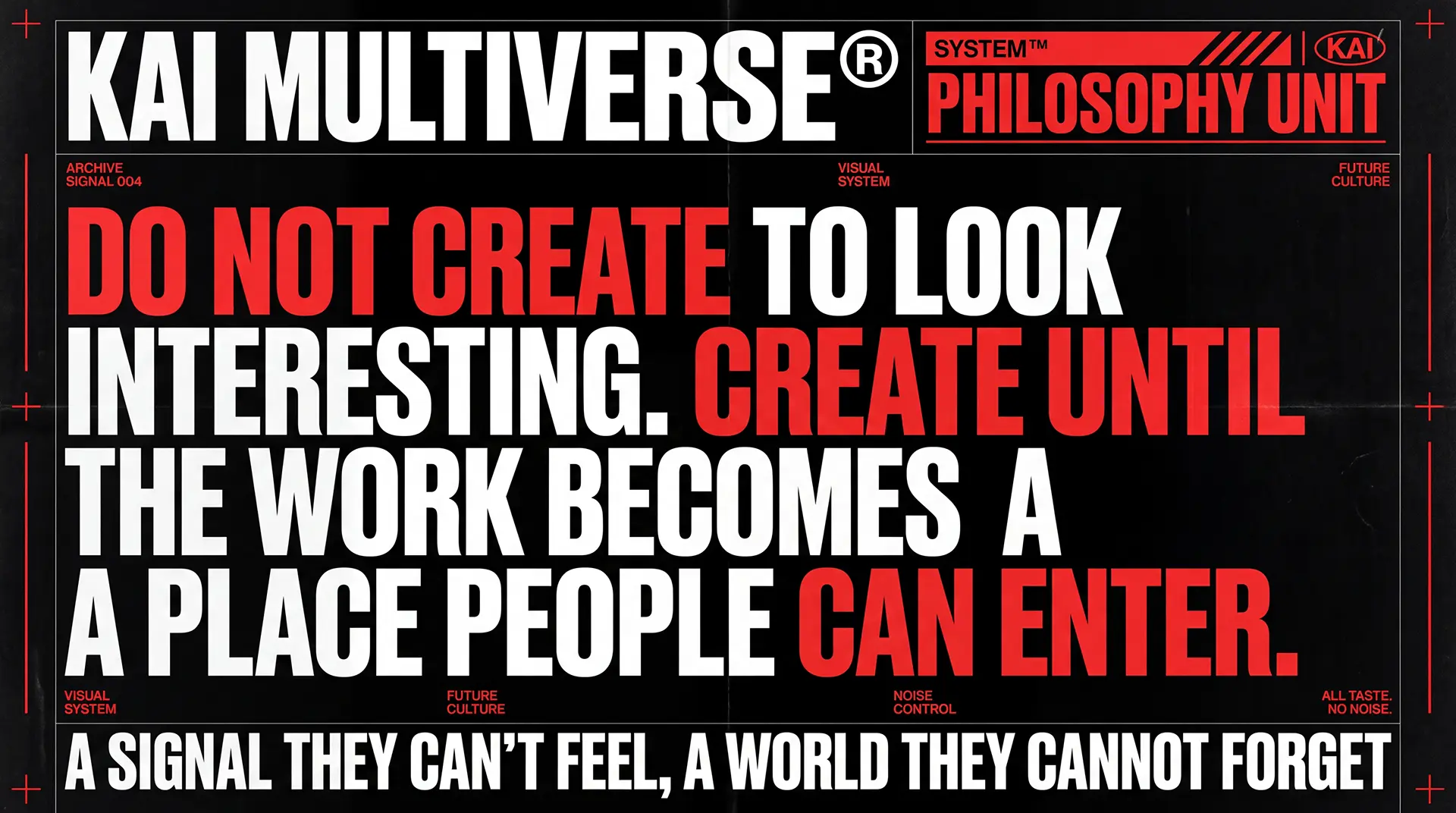
Pressure into language. Chaos into structure. Pain into form.
The KAI doctrine made explicit: creative work is not surface content but a place people can recognize, enter and remember.
What changes when creative work stops trying to look interesting and begins building a place another person can enter?
HUMAN OBSERVATION
The culture already contains endless surfaces. Authorship begins when pressure, memory and conflict are given a form precise enough to hold recognition.
Large declarative typography behaves as architecture. Black and concrete fields create containment; Imperial Red marks the pressure points; the grid turns conviction into a navigable unit rather than a motivational slogan.
Why this file exists inside KAI.
The unit answers a culture of endless output and instant novelty. More content cannot compensate for the absence of motive, memory or a coherent place for the audience to enter.
Pressure and pain are not treated as aesthetic resources by default. They become meaningful only after they are processed into language, boundary, hierarchy and a form that can communicate beyond the maker.
The visual sequence.
Each artwork, with the idea and design decisions behind it.
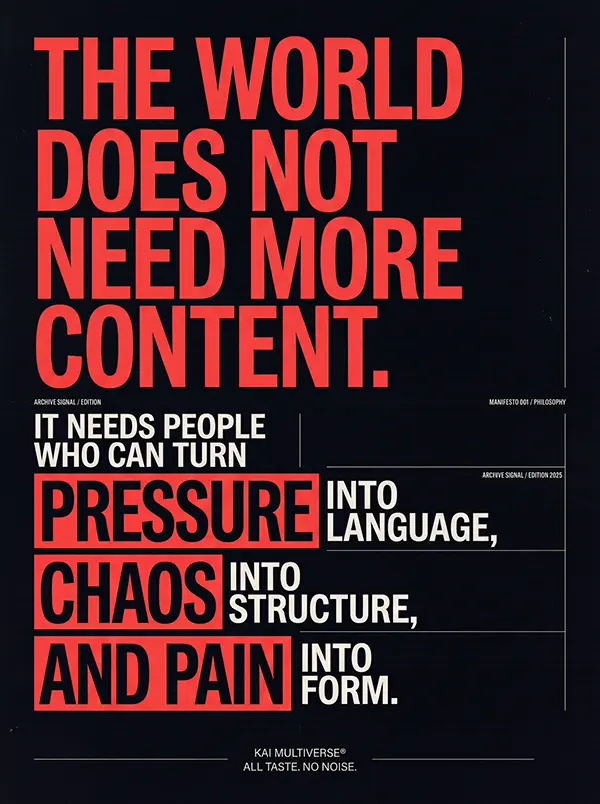
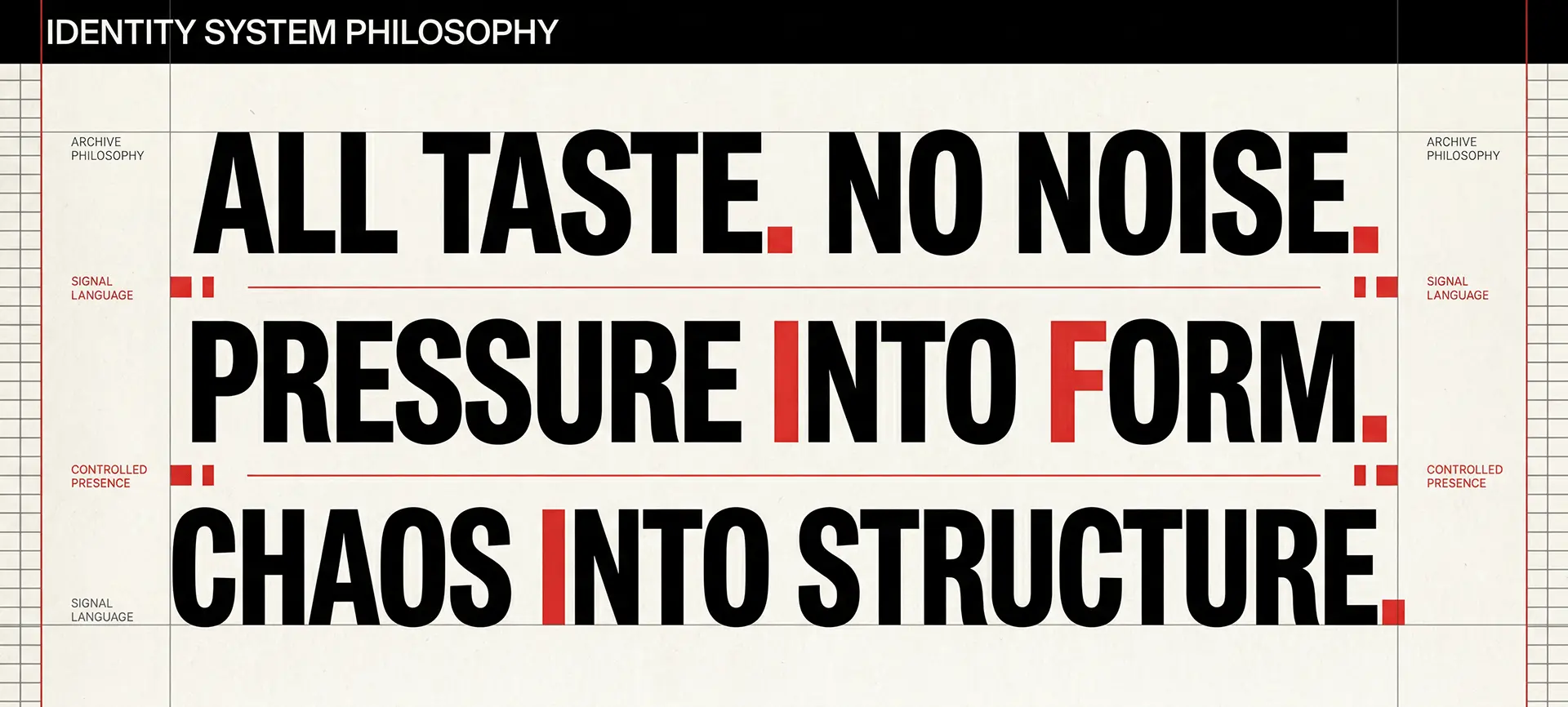
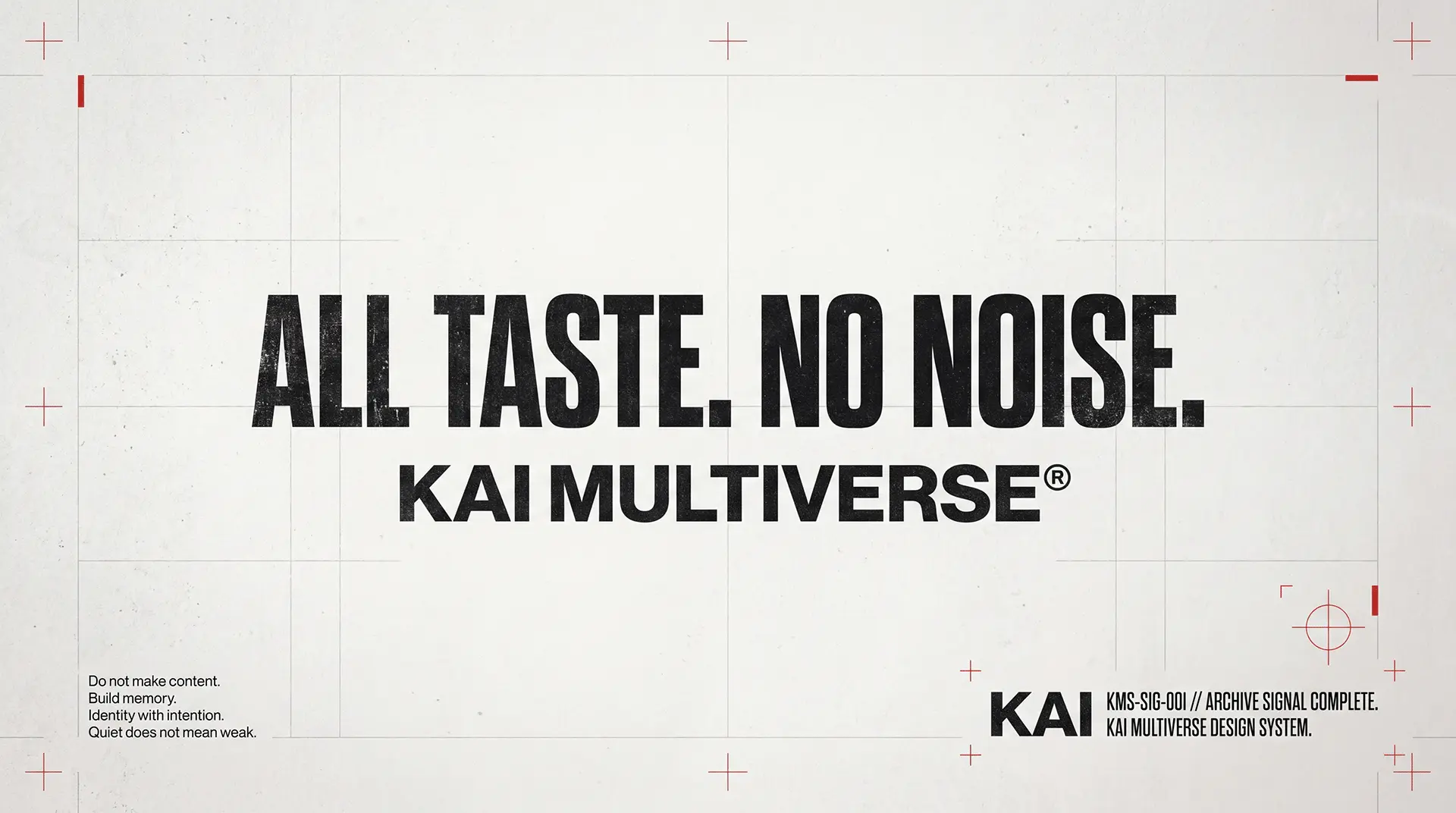
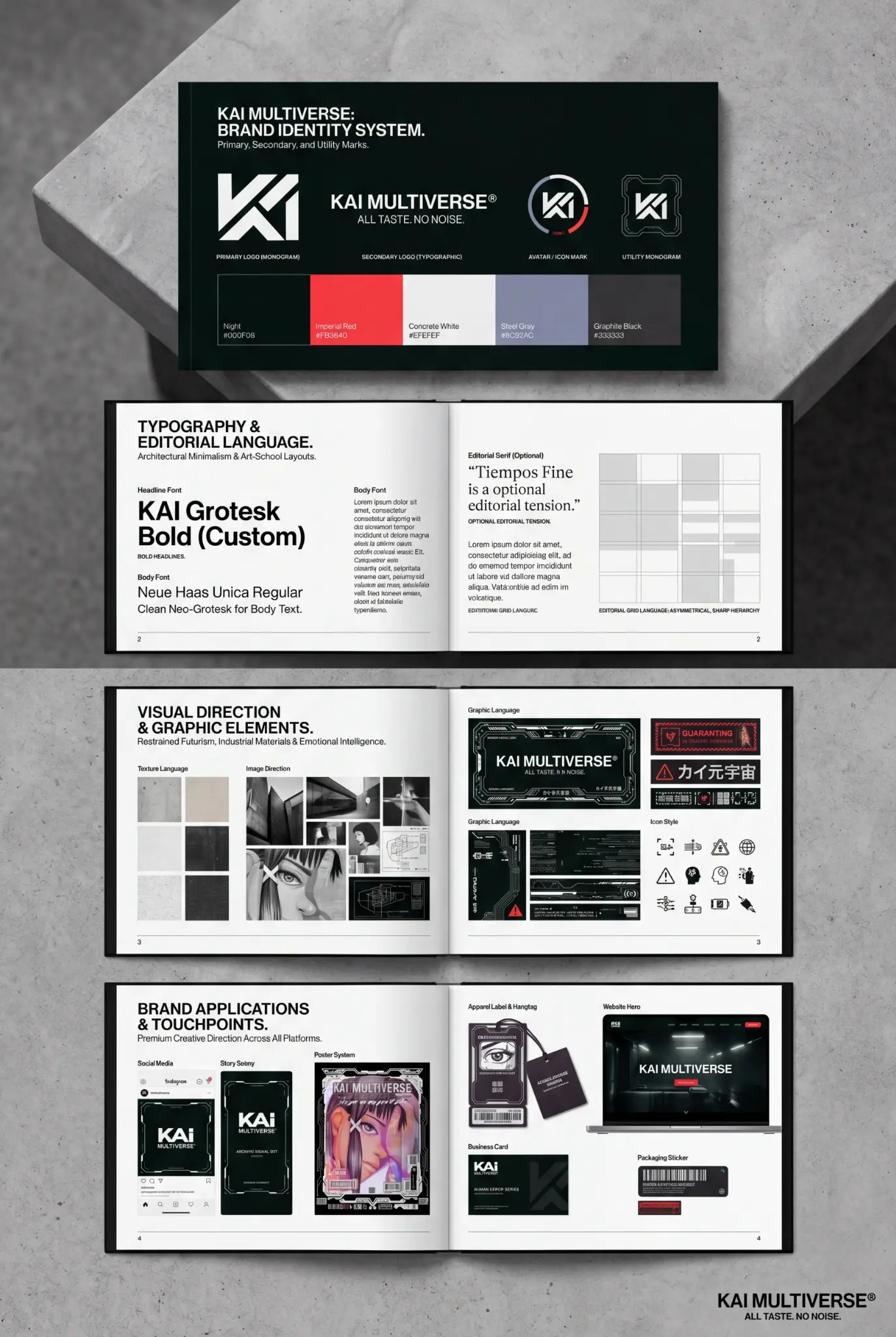
Swipe to explore · Tap artwork for the original
Three rules hold this file together.
Begin beneath appearance
Every file starts with the pressure, contradiction or human question that makes the work necessary.
Structure earns intensity
Emotion is not removed; it is edited into hierarchy, rhythm, scale and material so another person can read it.
Build a place, not a pose
The finished object must create enough coherence for the viewer to enter the thought, not merely admire the designer.
The idea becomes evidence through controlled applications.
01Doctrine landscape↗
02Manifesto poster↗
03Identity-system philosophy↗
04Archive positioning language↗
05Social statement series↗
BOUNDARY
This is KAI MULTIVERSE®'s authorial doctrine for its own creative practice. It is not a universal rule for art, a psychological treatment model or an institutional cultural claim.
STATUS
Published as the KAI philosophy unit and used as the interpretive key for every archive file.